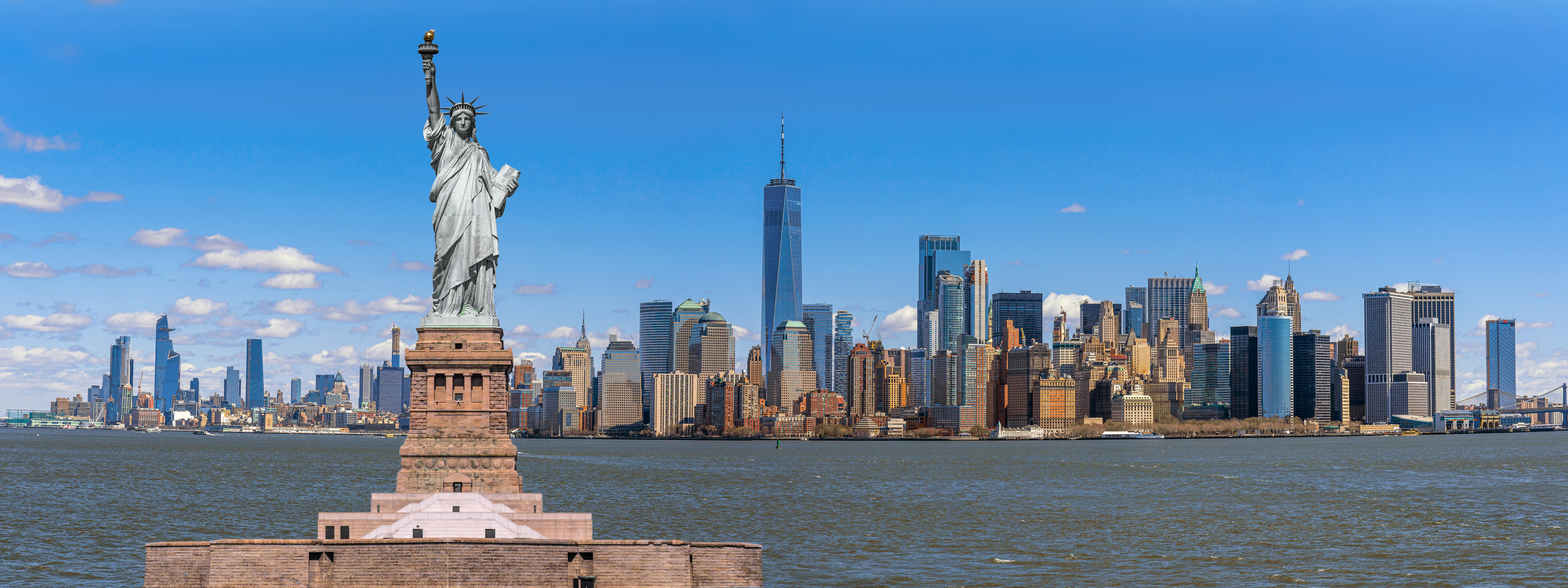
Kuliah di
United States
Studying in the United States is a dream for most Indonesian students who want to continue their studies. The United States (USA) is known as the land of many promises, because in the beginning, this country was occupied by people who came from Europe. Currently, the non-European ethnicities mostly found in this country are Mexican, African, East Asian, South Asian, and others. Indonesian students are drawn to the U.S. for its prestigious universities and the wide variety of academic programs available, offering exposure to cutting-edge research and global networks.
Although occupied by a variety of people from different ethnic groups, this country still has its own unique culture that you'll surely encounter while studying there. The American culture celebrates diversity, making it an ideal environment for international students to feel welcomed and included. Indonesian students can also enjoy community groups and student organizations that cater to their cultural background, creating a sense of belonging during their studies.
Informasi Edukasi
- Technologically advanced and use the most up-to-date education methods, incorporating virtual learning tools, interactive classrooms, and research-driven teaching. Indonesian students often benefit from access to cutting-edge resources and the latest educational innovations.
- Known for its multicultural society, where students from all corners of the globe come together to learn and exchange ideas. Indonesian students will find vibrant communities and networks that offer both cultural exchange and academic growth.
- High quality and international standard of higher education. Approximately 50% of the top 100 universities in the world came from the USA, with many of them offering specialized programs that align with the career aspirations of Indonesian students, particularly in fields like engineering, business, and technology.
- Comfortable and secure learning environment, with a strong emphasis on student safety and well-being. Many universities provide robust support systems for international students, helping Indonesian students adjust to life abroad and succeed academically.
- Permit to work part-time 20 hours per week during the school period and full-time 40 hours during holidays, providing students the opportunity to gain work experience and financial independence while studying. Many Indonesian students take advantage of these opportunities to support their education and explore different career fields.
- Opportunities for OPT (Optional Practical Training) to work full-time up to 12-17 months in the country after graduation (depending on the academic major you take), offering Indonesian graduates valuable work experience and a chance to build connections in their field of study before returning home or staying longer in the U.S.
- Very modern and has lots of interesting and beautiful sights, from bustling cities like New York and Los Angeles to natural wonders like the Grand Canyon and national parks. Indonesian students can take advantage of their time abroad to explore and experience the diverse landscapes and cultures that make the U.S. such a dynamic place to live and study.
Student Visa & Health Insurance
International students who want to study in united states must take a full-time study as student visa requirements. All international students in the United States, both at the university and taking only the language school must have an F-1 student visa. In addition, there is also the so called J-1 visa, the visa for a student exchange both for academic and culture; and M-1 visas for people who take non-academic lectures or courses in the United States.
Before a student visa, The Student and Exchange Visitor Information System (SEVIS) documents called the I-20 must be issued by an institution in the United States as evidence of the student's admission. SEVIS is an online database of all international students issued by the Department of Homeland Security (DHS).
Other supporting documents are proof of academic, financial, TOEFL®/ IELTS™ result, birth certificate, family card and pay a USD 160 visa money through a bank designated by the American embassy and the SEVIS fee of USD 200 paid online. Registration visa itself can be done 120 days before intake (date of school entry). However, new students are allowed to enter the United States 30 days prior to school intake. Arriving in the United States, students have to report to the International Office on campus, so that the school can immediately complete the SEVIS system. Negligence for failing to report can lead to a student visa being revoked.
Updated Visa Fees & Requirements
The visa application fee has increased from USD 160 to USD 185, and the SEVIS I-901 fee remains USD 350 for F-1 students (now commonly cited) or USD 220 for J-1 exchange visitors. The total cost for F-1 visa processing is now approximately USD 535 (visa fee USD 185 + SEVIS fee USD 350).
For Indonesian citizens specifically, an additional reciprocity fee has been in effect since June 20, 2023. The SEVIS fee must be paid online before scheduling the visa interview and cannot be processed at the U.S. Consulate or port of entry. Payment must be completed through the official FMJfee.com portal, and students should print or save the payment receipt for visa interview presentation.
Critical 2025 Visa Policy Updates for Indonesian Students
The U.S. student visa landscape underwent significant changes in 2025. In May, the U.S. State Department temporarily suspended new F-1, J-1, and M-1 visa appointments globally, beginning May 27, 2025, to implement expanded social media screening for all student visa applicants. This suspension particularly affected Indonesian students applying for fall 2025 enrollment.
The Indonesian Ministry of Higher Education advised all Indonesian students then in the United States not to leave the country during this uncertainty. Visa appointments resumed on June 18, 2025, following the State Department's rollout of mandatory social media vetting requirements, though this resulted in longer interview times and fewer appointment slots per day. As of December 15, 2025, all applicants for F, M, and J visas must ensure their social media profiles are accessible for inspection by visa officers.
Visa Status Enforcement Tightened
Under revised enforcement (as of 2025), if a student's visa is revoked, their legal status in the United States is immediately impacted, and they must leave the country or face detention by immigration authorities a significant departure from previous rules where revocation primarily restricted international travel without affecting legal stay. Reports from early 2025 documented over 525 visa revocations across 80+ U.S. universities, primarily affecting students for violations of visa regulations or other legal breaches.
Future Visa Policy Uncertainty
On June 27, 2025, the U.S. Department of Homeland Security (DHS) submitted a proposed rule to end the long-standing "Duration of Status" (D/S) admission for F-1 students. Currently, F-1 students can remain in the U.S. as long as they maintain enrollment status, with no fixed end date on their visa. The proposal would replace this with fixed-term visas expiring on a specific date, potentially requiring visa extensions if studies extend beyond the fixed term. Most students would likely receive visas for up to 4 years, though the exact terms will be finalized in the federal rulemaking process. This proposal is still pending, but Indonesian students should monitor official announcements from the U.S. Department of State and DHS for implementation details.
International students studying in the United States must have health insurance during their study. It is also required by the schools so that every student who goes to the United States has an insurance that guarantees cover his health, because the cost of health care in the United States is known to be very expensive. Therefore, the school issues a policy that combines insurance costs with tuition fees, so that students who depart certainly have health insurance during their study. Insurance costs included in the tuition fee range between USD 600 - USD 1,500 per year.
Significantly Updated Health Insurance Costs Current health insurance costs for international F-1 students are now substantially higher and more variable than the USD 600-1,500 range previously cited. Budget-conscious options start at USD 30-124 per month (USD 360-1,488 annually) through third-party insurers compliant with U.S. visa requirements, though these budget plans typically have higher deductibles (USD 100-500) and lower coverage maximums (USD 50,000-300,000). However, most U.S. universities require students to enroll in their institutional health insurance plans, which are considerably more expensive:
- University of Texas at Austin: USD 1,114-1,392.50 per semester (USD 2,228-2,785 annually)
- University of Michigan: USD 291.27 per month for single coverage (USD 3,495 annually; up from USD 248.89 in 2024-2025)
- Arizona State University: USD 2,765 for graduate students; USD 2,765 for undergraduates
- University of Evansville: Estimated USD 2,000 for full academic year
For Indonesian families, the higher end (USD 2,500-3,500 annually) is common at major universities, and this cost is typically non-negotiable as it is bundled with enrollment. Insurance covers general practitioners, hospital inpatient care, and prescription drugs, with dental and eye care usually excluded, consistent with your original article.
Accommodation
Lots of accommodation options are available for international students in the United States, ranging from accommodation in university, renting an apartment or house, and the option to stay with a local family-homestay.
For dormitory that is provided by the university, students need to make reservations as soon as two (2) or three (3) months earlier. For students who come earlier, they can stay in a hotel, motel, YMCA youth hostel, or international houses.
The cost of accommodation in the United States ranges from USD 700 - USD 3,000 per month.
Accommodation Costs
The USD 700-3,000 range remains broadly accurate but the distribution has shifted upward in major cities. Current typical monthly costs are:
- On-campus dormitory: USD 800-1,200/month (USD 10,000-17,000 annually with meal plans)
- Off-campus shared apartment: USD 700-1,500/month (USD 8,400-18,000 annually)
- Private apartment: USD 1,200-2,500+/month (USD 14,400-30,000+ annually)
University Housing Example
- UIC Chicago: Shared dorms USD 10,009-12,361/semester; add meal plan USD 4,120-6,469
- FIU Miami: Shared bedrooms USD 1,844-2,336/semester; private bedrooms USD 3,142-4,740/semester
For Indonesian students, housing costs represent a significant portion of the total budget typically 30-40% of monthly living expenses. Major cities (New York, Boston, San Francisco, Los Angeles) trend toward the USD 1,500-2,500 end; smaller college towns often offer USD 700-1,200 options. Sharing apartments with 2-3 students is increasingly common among international students to reduce per-person costs to USD 700-1,000/month.
Part Time Work
International students are allowed to do part time work inside the campus (on-campus) area only and only for a maximum of 20 hours per week. But after they graduate, students have the opportunity to work full time for up to one (1) year, it is called Optional Practical Training (OPT). Students who pursue majoring in Science, Technology, Engineering and Mathematics (STEM) get a chance OPT up to 17 months.
On-Campus Work Rules
The work restrictions remain unchanged F-1 students may work a maximum of 20 hours per week during academic sessions on campus, with no separate work authorization required.
Full-time work (40 hours/week) is permitted during official school breaks and holidays. Work must be on-campus; off-campus employment requires prior approval from the Designated School Official (DSO) and is typically only available after completing one full academic year through Curricular Practical Training (CPT).
Wage Rates
The federal minimum wage remains USD 7.25/hour, but many U.S. states and cities have much higher minimum wages (USD 14-25/hour depending on location). Most on-campus student jobs pay between USD 8-15/hour for standard roles (library assistant, administrative support), though specialized positions are higher:
- Tutor or peer mentor: USD 23.94/hour
- Research study assistant: USD 16.19/hour
- Department assistant: USD 16.44/hour
- Teaching/research assistant: USD 12-15/hour typical
- Barista or food service: USD 12-14/hour
Indonesian students should note that even with maximum on-campus work (20 hours/week at USD 15/hour), weekly earnings are approximately USD 300, or roughly USD 1,200 monthly before taxes. This is typically insufficient to cover full monthly costs (averaging USD 1,500-2,500) and should be viewed as supplementary income only.
Optional Practical Training
After graduation, F-1 students are eligible for 12-month standard OPT to work in their field of study. For students with STEM (Science, Technology, Engineering, Mathematics) degrees, the work period is significantly longer:
- Initial 12-month OPT period (same as all fields)
- Plus 24-month STEM extension = 36 months total work authorization
The original article cited "up to 17 months" for STEM students; this was replaced by the 24-month extension in March 2016, allowing a total of 36 months (3 years) of post-graduation work in the United States. This is one of the most valuable benefits for STEM graduates, including those from Indonesia, as it provides time to gain U.S. work experience, build professional networks, and potentially secure employer sponsorship for H-1B employment-based visas. STEM OPT is available a maximum of twice in a lifetime and requires the work to be directly relevant to the STEM degree earned.
International Student Enrollment & Policy
For the 2024-2025 academic year, U.S. higher education institutions hosted approximately 1,177,766 international students, representing a 4.5% increase from the previous year. However, new international student enrollment declined 7.2%, from 298,705 (2023-2024) to 277,118 (2024-2025). Graduate-level international enrollment declined 2.7% in 2024-2025, with an additional 5.9% drop in fall 2025, signaling a shift from earlier recovery trends. The fall 2025 semester saw a steeper 17% decline in new international student enrollments, attributed to visa restrictions and an uncertain political climate regarding immigration policy.
While Indonesia is not among the top three sending countries (India and China historically dominate international enrollment), Indonesian students have faced specific challenges in 2025. The May-June visa suspension directly affected Indonesian applicants, and the Indonesian government issued formal advisories to students. Universities have responded to enrollment pressures by offering flexible enrollment options: 72% of institutions offered admission deferrals to Spring 2026 or Fall 2026, and 37% introduced flexible enrollment options such as online start dates or program delay arrangements.
Primary & Secondary Schools
In general, the length of primary and secondary education in the United States is the same as Indonesia's, which is 12 years. You have to go through basic education in primary school for five years, and continue to secondary school for seven years. After graduating from grade 12, students will get a High School Diploma; recognized for admission to colleges and universities in the United States.
Recognition of Indonesian Secondary Education
For Indonesian students graduating from national high schools (SMA or SMK), U.S. universities recognize Indonesian diplomas as equivalent to the American high school diploma for undergraduate admission purposes. However, universities typically require additional supporting documents including SAT or ACT test scores, TOEFL or IELTS English proficiency results, and officially translated transcripts with minimum grade requirements (usually equivalent to a B average or 75-80% minimum). Students from Indonesian international schools offering the International Baccalaureate (IB) Diploma Programme have a structural advantage, as IB credentials are highly valued by U.S. admissions offices and often include advanced standing or course credit.
Alternative Pathways for Indonesian High School Students
Indonesian students still in high school (grades 10-11) can participate in the Kennedy-Lugar Youth Exchange and Study (YES) Program, a fully funded U.S. State Department initiative bringing students to the United States for one academic year at an American high school. Since its launch in 2001, almost 2,000 Indonesian high school students have participated. Additionally, students can enroll in online U.S. Dual Diploma programs (such as those offered by Hudson Global Scholars and other accredited providers) to earn both an Indonesian diploma and an American high school diploma simultaneously, improving their English proficiency and preparing for U.S. university academics without leaving Indonesia. These dual-diploma credentials are recognized globally and provide significant advantages when applying to competitive universities.
Considerations for Families
The direct pathway from Indonesian SMA/SMK to U.S. universities is feasible but requires early planning ideally starting in grade 10 to prepare for standardized testing (SAT/ACT, TOEFL), understand U.S. application timelines (often 12-18 months in advance), and meet financial documentation requirements for the F-1 visa.
Professional Degree Program (Undergraduate Degree)
The United States has more than 4,760 colleges and universities; including 17 renowned scientific research universities and eight top universities in the world. After getting a high school diploma, students can continue their studies for a Bachelor's degree for four years. Students are expected to determine the direction of interest at no later than the second year.
Community College is a two-year state or public college, which offers two years of education and is available for local communities. However, many international students who choose modes of this institution for their intensive English language program or ESL and special services such as free tutoring.
Tuition at renowned universities ranges around USD 20,000 - USD 55,000 per year; whereas at the community college costs less, ranges between USD 6,500 - USD 10,000 per year.
Government schools offer a more affordable cost compared to private schools; and community college presents the lowest cost option among other government schools.
While the original USD 20,000-55,000 range for universities remains broadly accurate, current tuition at top-tier institutions has increased substantially. For international students (classified as out-of-state or non-resident), typical 2025-2026 costs are:
Annual tuition increases for the 2025-2026 academic year were 2.9% at public universities and 4.0% at private universities the highest sustained increases since 2019. For Indonesian families, this means budgeting should assume 3-5% annual increases over a four-year undergraduate program.
Public vs. Private Universities
While private universities appear significantly more expensive (average USD 46,700 vs. USD 24,513 at public universities for out-of-state students), approximately 85.3% of private university students receive financial aid, with an average grant of USD 23,080 per year. In contrast, public universities offer aid to 69.4% of students, averaging only USD 8,100 in grants. For high-achieving Indonesian students with strong academic records, some private universities may therefore become financially competitive with public institutions after scholarships are considered. However, most international students are ineligible for U.S. federal financial aid, so merit-based institutional scholarships are the primary source of support.
Community College
Community college tuition for international students remains substantially lower than four-year universities, though the original USD 6,500-10,000 estimate now understates the full cost. Updated figures show:
-
National average tuition: USD 5,431 per year (in-district); USD 9,002 per year (out-of-state/international)
-
Santa Monica College (California): USD 11,232 tuition + USD 2,366 health insurance + USD 13,644 estimated living = USD 33,000 total annual cost
-
Seattle Colleges (Washington State): USD 11,283 tuition + fees + USD 13,338 housing/food + USD 1,410 insurance = USD 27,966 total
-
Northampton Community College (Pennsylvania): USD 15,728 tuition + USD 10,512 housing/meals + USD 1,200 insurance = USD 30,040 total (with on-campus housing)
For Indonesian students, tuition alone remains affordable (USD 10,000-16,000), but total cost of attendance (including mandatory insurance, housing, meals, and books) typically reaches USD 27,000-33,000 per year.
The 2+2 Transfer Pathway
One of the most strategic and increasingly popular pathways for international students, including Indonesians, is the 2+2 transfer model, complete two years at a community college, then transfer to a four-year university to complete the bachelor's degree. This pathway offers multiple advantages:
- Identical Degree: Transfer students graduate with the exact same bachelor's degree as students who started at the four-year university.
- Significant Cost Savings: By starting at community college, students can save USD 30,000-80,000+ over four years compared to attending a four-year university from the start.
- Guaranteed Transfer Agreements: Many community colleges have formal articulation agreements with four-year universities (especially state systems), guaranteeing admission and full credit transfer if the student meets GPA requirements (typically 2.5-3.0 minimum).
- Access to Top Universities: Major universities with strong community college transfer pathways include UCLA, UC Berkeley, University of Washington, Arizona State University, and University of Illinois.
- Smaller Class Sizes: Community college class sizes are typically 20-30 students, compared to 100-300 in freshman lectures at large universities, allowing more personalized instruction and easier adjustment to U.S. academic culture.
- Easier Admission Requirements: Community colleges have lower English proficiency and GPA requirements than competitive four-year universities, making them accessible for Indonesian students who need additional time to strengthen academic English.
How the 2+2 Model Works:
- Apply to and enroll at a community college with transfer agreements to your target university.
- Complete general education and prerequisite courses for your intended major (typically 60-70 credits over two years).
- Maintain a strong GPA (2.5-3.0 minimum; competitive universities prefer 3.5+).
- Work closely with an academic advisor to ensure all courses align with transfer requirements.
- Apply for transfer during your second year; most universities accept transfers for junior year (year 3).
- Complete your final two years at the four-year university and graduate with a bachelor's degree from that institution.
For Indonesian students concerned about cost or needing extra time to build English proficiency before entering a competitive university, the 2+2 pathway is highly recommended. California community colleges, in particular, offer the lowest tuition in the nation (USD 1,440-11,000 per year) and direct transfer pathways to the prestigious University of California system.
Professional Graduate Program (Graduate Degree)
After completing a Bachelor's Degree, students can move on to the Masters program with the average duration of two years. Often students can be accepted in certain majors Masters program if they obtain a Bachelor degree with related major. However, many exceptions granted to students who wish to proceed to the Master of Business Administration (MBA) program.
Furthermore, students can complete a PhD which takes about three to six years depending on the majors explored, the ability of the student, and the thesis selected. A thesis is a deep research task and it is required as a graduation assignment; sometimes even as a requirement to graduate from the Master Degree, particularly for the Department of Law, Medicine and Dentistry.
Tuition for Postgraduate Professional (Graduate Degree) ranges between USD 20,000 to USD 60,000 per year.
The USD 20,000-60,000 range remains accurate for many programs, but top-tier universities and specialized programs now exceed this range substantially.
Geo & Budaya
Universitas Terkemuka di United States
Search:

We Didn't Find What You Mean
Try again or make sure you enter the correct keyword
Negara Lainnya


Connect with SUN Education