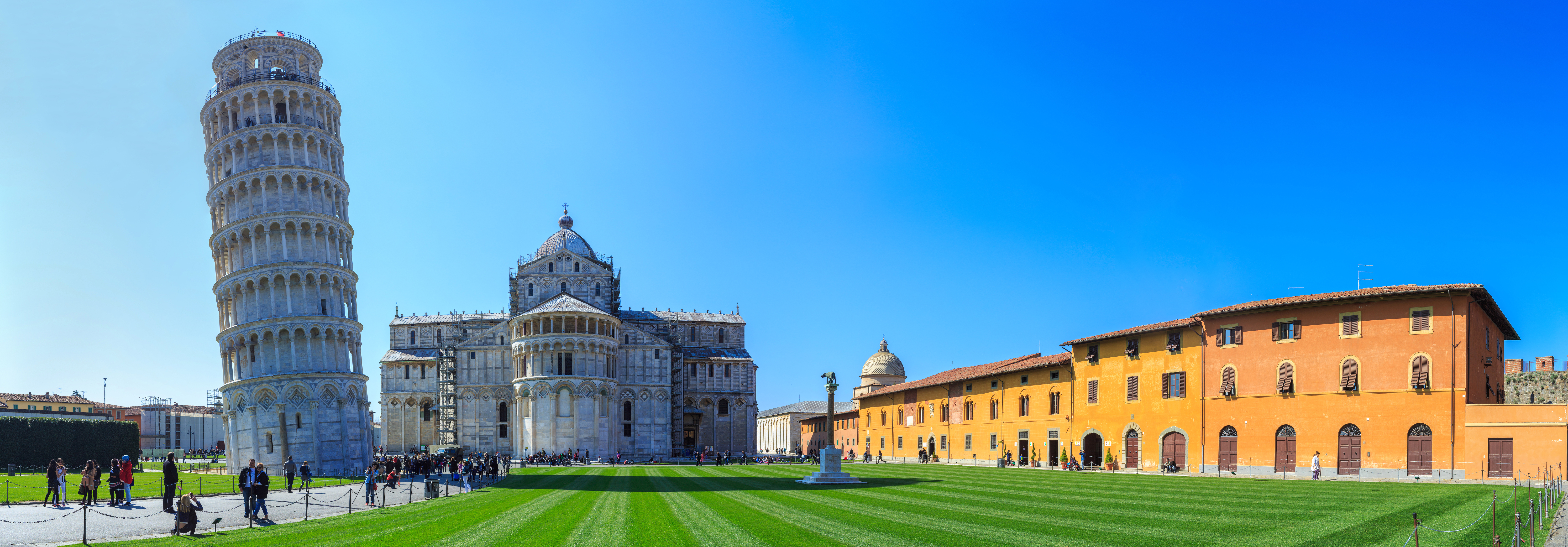
Kuliah di
Italy
Studying in Italy offers a balance between strong academic foundations and creative, future-oriented learning. Italian universities are widely recognized for excellence in design, architecture, business, engineering, and the arts, with programs that combine theory, innovation, and real-world application. Graduates gain internationally valued skills and access to career opportunities across Europe.
Beyond the classroom, student life in Italy is dynamic and affordable. Students enjoy well-connected cities, a relaxed yet productive lifestyle, and a rich cultural environment. From historic campuses to modern urban hubs, Italy provides an inspiring setting to learn, grow, and build a global future.
Informasi Edukasi
- Scholarships and tuition reductions available for international students
- Strategic location in Europe, making it easy to travel and build international networks
- High quality of life with excellent food, vibrant student cities, and scenic landscapes
- Well-connected cities with reliable public transportation
- A unique study experience that combines academic growth with an inspiring lifestyle
- Degrees are internationally recognized across Europe and worldwide
- Strong global reputation in arts, design, architecture, fashion, business, and engineering
Student Visa
International students who plan to study in Italy for more than 90 days must apply for a National Study Visa (Type D). This visa is issued based on an official acceptance letter from an Italian university or institution. After arriving in Italy, students are required to apply for a Residence Permit (Permesso di Soggiorno) within 8 days through the local post office and immigration authorities.
For short-term study or language programs lasting less than 90 days, a Schengen Visa (Type C) may be sufficient, depending on nationality. Students must also provide proof of financial capability, accommodation, and valid health insurance.
Type D via Prenot@Mi/Universitaly pre-enrollment; requires passport, photos, enrollment, €467.65/month min (€6,000/year scholarship/personal funds/bank guarantee), insurance, accommodation; €50 fee, 2-8 weeks processing. Permesso: Kit at post office (€40.46 + €30.46 + €16), fingerprint at Questura; valid 1 year renewable.
Accommodation
Italian universities generally do not automatically provide housing, but students can apply for university residences or arrange private accommodation independently. Due to high demand in major cities, early application is strongly recommended.
Students are required to register their address with local authorities after arrival as part of residency regulations.
Register at Anagrafe within 20 days for permesso; ER.GO/DSU housing aids low-income students.
Student Residences / University Housing
University residences are a popular option for international students due to their affordable costs and supportive student environment. These residences are usually managed by regional education bodies or partner institutions.
Facilities typically include:
- Furnished rooms
- Shared or private bathrooms
- Shared kitchen areas
- Internet access
- Laundry facilities
Residences are usually located near campuses or well connected by public transportation.
Polimi residences: €4,500-€7,750/year single/double (2025-26 rates); John Cabot €4,600-€6,150/semester. Priority DSU/ERDIS recipients; apply via uni portals 6 months early.
Off-campus Accommodation
Students who prefer more independence may choose to live in shared apartments or private flats. Accommodation can be found through online platforms, university housing services, or local agents.
Rental costs vary by location, with Milan, Rome, Florence, and Bologna generally having higher living costs compared to smaller cities.
Shared flats (collocationato) €400-€800/month Milan/Rome; studios €700-€1,200 via Immobiliare/Uniplaces; utilities €100+/month extra.
Part-Time Work
Italy offers international students the opportunity to gain professional experience while completing their studies. Under current regulations, students can take on part-time employment for up to 20 hours per week, with an annual limit of 1,040 hours.
Many students find flexible work in sectors such as hospitality, tourism, retail, and on-campus services. These roles not only help cover daily living costs but also provide valuable exposure to the Italian work environment and culture.
20h/week term-time, full-time holidays; no work permit needed with permesso studio. Jobs: UniPd 200h max €9-€12/hour tutors/cafeteria; hospitality/tourism common. Declare income for tax.
1. Primary & Secondary Schools
Primary and secondary education in Italy is provided by state and private schools, including international schools. Education is compulsory for 10 years. After completing upper secondary school, students receive the Diploma di Esame di Stato, which allows entry into Italian universities.
Tuition fees at international schools range from EUR 8,000 - EUR 22,000 per year.
International schools like International School of Milan offer IB Diploma; fees €15,000-€28,000/year with boarding. Public licei/classici free for residents; Esame di Stato includes digital skills assessment via INVALSI.
2. Language Programs
Italy offers Italian and English language programs for international students. Italian proficiency is proven through CILS or CELI, while English-taught programs accept IELTS or equivalent.
Fees generally range from EUR 200 - EUR 450 per week.
Scuole Dante Alighieri/Universitaly certified FLI courses A1-C2; €250-€500/week intensive. English TOEFL/IELTS prep at EF Florence; visa for >90 days requires B1 min.
3. Vocational & Professional Education
Vocational education focuses on practical skills in areas such as hospitality, fashion, design, and technology. Programs lead to certificates or diplomas.
Tuition fees range from EUR 3,000 - EUR 12,000 per year.
ITS Academy (2 years post-diploma) in tourism/moda; €2,000-€8,000 with paid internships €800/month. IFTS regional programs align RQ4 EQF; progression to Laurea possible.
4. Foundation / Preparatory Programs
Foundation programs help international students meet academic and language requirements for university entry. Program duration is 6-12 months.
Fees typically range from EUR 7,000 - EUR 18,000 per year.
TIL-I (Titolo Integrato Liceo) for non-EU high school equiv; private €9,000-€15,000. Uni foundation years at Bologna/Polimi bridge language/subjects for TOLC test.
5. Undergraduate Degree (Bachelor)
Bachelor’s degrees in Italy take 3 years and are internationally recognized.
Public university tuition fees usually range from EUR 900 - EUR 4,000 per year.
ISEE-based fees €156-€3,500 (non-EU avg €2,500); no-numerus clauses via CISIA TOLC. English-taught Lauree at Bocconi (€14,000/year), Politecnico Milano.
6. Postgraduate Degree (Master & PhD)
Master’s degrees take 2 years, while PhD programs last 3-4 years and are often funded through scholarships or stipends.
Public university master’s fees generally range from EUR 1,000 - EUR 5,000 per year.
Laurea Magistrale €800-€4,000 ISEE; PhD €15,000-€20,000/year stipend + fee waiver. MIUR "Dottorati Innovazione" funds 10,000 positions; 60% English Masters.
Geo & Budaya
Universitas Terkemuka di Italy
Search:

We Didn't Find What You Mean
Try again or make sure you enter the correct keyword
Negara Lainnya
Connect with SUN Education