Kuliah di
Qatar
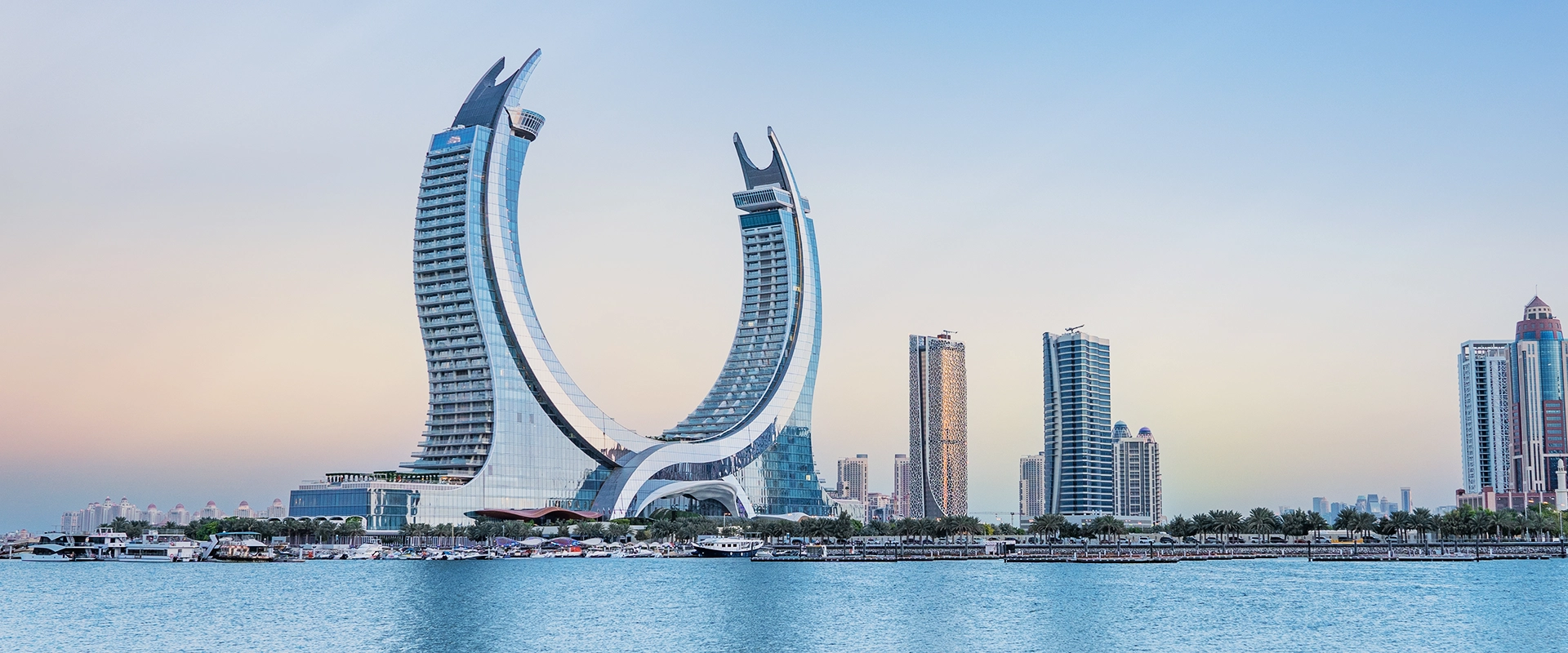
Qatar is a rapidly growing education and innovation hub in the Middle East, known for its strong investment in higher education, research, and global partnerships. Located on the Arabian Peninsula, Qatar combines modern infrastructure, cultural heritage, and a high standard of living, making it an increasingly attractive destination for international students.
One of Qatar’s most distinctive features is Education City, a world-class academic hub in Doha that hosts branch campuses of leading international universities from the USA, UK, and Europe. With English as the primary language of instruction in most programs, Qatar offers students access to globally recognised degrees while experiencing a safe, multicultural, and future-focused environment.
Informasi Edukasi
- Home to international branch campuses of top global universities
- English-taught programs across undergraduate and postgraduate levels
- Strong focus on innovation, research, and future industries
- Modern facilities, cutting-edge laboratories, and advanced campuses
- High level of safety and political stability
- Exposure to Middle Eastern business, diplomacy, and global energy sectors
- Scholarships and financial support available at selected institutions
Visa & Health Insurance
International students must obtain a Qatar Student Residence Permit, which is usually sponsored by the university after admission confirmation. The visa application process can be complex but is primarily coordinated by the institution to simplify the process for international students.
Visa Sponsorship and Processing Timeline:
Your university's international student office initiates the visa application process on your behalf after you have formally accepted your admission offer and completed all admission requirements. The overall visa process typically takes 6-12 weeks from initial application to entry permit issuance, broken down as follows:
- Application Preparation & Document Attestation (4-8 weeks): Gathering required documents, obtaining official translations, and completing attestation/legalization from your home country's Ministry of Foreign Affairs and the Qatari Embassy. This is often the longest phase
- University Sponsorship & MOI Approval (2-4 weeks): Once documents are submitted to your university, they apply for your entry permit/visa sponsorship through the Ministry of Interior (MOI) in Qatar
- Entry Permit Issuance (1-2 weeks): After MOI approval, your electronic entry permit is issued, allowing you to travel to Qatar
- Residency Permit Processing Upon Arrival (2-4 weeks): You will undergo mandatory medical examination and fingerprinting to convert your entry permit into a full student residency permit
Key Tip: Apply 3-4 months before your program start date. The university's international office is your primary point of contact for visa status updates.
Required Documents for Student Visa Application:
- Valid passport with at least 6 months validity beyond intended study period
- Unconditional admission letter from an accredited Qatari university
- Proof of financial stability (recent bank statements, sponsorship letters, or scholarship documentation) demonstrating sufficient funds to cover tuition and living expenses
- Medical report with clearance for infectious diseases (HIV, TB) from an authorized health center
- Police Clearance Certificate (PCC) or criminal background check from your home country
- Proof of accommodation (dormitory allocation or rental agreements)
- Passport-sized photographs meeting Qatari government specifications
- Completed visa application form and proof of fee payment
Upon arrival in Qatar, you must register at the local Residents' Registration Office within 14 days. After entering Qatar, you will undergo a mandatory medical examination and fingerprint process to finalize your Residence Permit (RP) card, which serves as your official identification.
Medical Examination Requirements:
Students are required to complete mandatory medical checks upon arrival in Qatar, as part of the residence permit application process.
Required Medical Tests Include:
- Chest X-ray (for TB screening)
- Blood tests (HIV, Hepatitis B and C, and other infectious diseases)
- General physical examination (height, weight, blood pressure, examination of eyes, ears, nose, throat)
- Urine sample collection
Medical Test Costs: Approximately QAR 100-300 (USD 27-82). Medical examinations must be conducted at MOI-approved health centers.
Common Issues & Solutions:
- False-positive results or incomplete documentation can delay the process
- Use certified translation services for medical records
- Ensure all previous medical records are accurate and complete
Health Insurance Requirement:
Health insurance is mandatory for all international students in Qatar. The government requires all international students to maintain valid health insurance coverage either through university-provided plans or private providers approved in Qatar. Lack of proper health insurance may affect visa approval or renewal.
University-Sponsored Insurance Plans:
Major universities in Qatar offer comprehensive health insurance plans through partnerships with local insurers:
| University | Annual Cost | Coverage | Waiver Available |
|---|---|---|---|
| Qatar University | QAR 2,800-3,200 | QAR 500,000 minimum | Yes, with equivalent coverage proof |
| Georgetown University in Qatar | QAR 4,500-5,200 | QAR 750,000 minimum (with mental health benefits) | Yes, US university standards required |
| Carnegie Mellon University Qatar | QAR 4,200-4,800 | QAR 1,000,000 minimum | Yes, must meet US standards |
| Northwestern University in Qatar | QAR 4,800-5,500 | QAR 800,000 minimum (with prescription drug benefits) | Yes, requires equivalent coverage proof |
| Texas A&M University at Qatar | QAR 3,800-4,300 | QAR 600,000 minimum (with emergency evacuation) | Yes, must demonstrate equivalent coverage |
Monthly Breakdown of University-Sponsored Plans:
- Monthly premium: QAR 150-300
- Annual deductible: QAR 500-1,000
- Doctor visit copay: QAR 50-100
- Prescription copay: QAR 25-75
- Emergency room copay: QAR 200-400
- Estimated annual cost: QAR 2,500-4,500
Private Insurance Options:
Local insurers such as Qatar Insurance Company (QIC), Doha Insurance, and Al Khaleej Takaful offer student-specific plans:
- Cost Range: QAR 3,000-6,000 annually (or QAR 200-450 per month)
- Coverage: QAR 200,000-500,000 with access to private hospitals like Sidra Medicine and Al Emadi Hospital
- Annual deductible: QAR 750-1,500
International/Global Insurance Plans:
Global providers like Cigna Global and Allianz Care offer Qatar-compliant international student plans:
- Cost Range: Starting from QAR 4,500 annually
- Benefits: Suitable for students planning regional travel or requiring worldwide coverage during breaks
- Coverage: QAR 300,000-750,000
Insurance Waiver Requirements:
If you have existing international health coverage, some universities allow waivers with proof of equivalent coverage. Waiver requirements vary by institution:
- Qatar University: Requires proof of QAR 500,000 minimum coverage
- Georgetown University in Qatar: Requires comprehensive coverage with QAR 750,000 minimum and mental health benefits
- Carnegie Mellon University Qatar: Must meet US university standards with QAR 1,000,000 coverage minimum
- Northwestern University in Qatar: Requires proof of coverage with QAR 800,000 minimum and prescription drug benefits
Important Notes:
- Pre-existing conditions are typically covered immediately with university plans (no waiting period), but private plans may have 6-12 month waiting periods
- University plans include full access to on-campus clinics with no copay
- Mental health coverage is comprehensive with university plans (including counseling and psychiatric care), while private plans offer only basic coverage (QAR 10,000-25,000 annual limits)
- Enrollment in university plans is typically automatic with tuition payment
Residence Permit Fee:
The Residence Permit card issuance fee is approximately QAR 500-1,000 (USD 140-275), with validity for 1 year and renewal required annually.
Accommodation
Most universities in Qatar offer on-campus or university-affiliated housing, making accommodation arrangements straightforward for international students. Doha, the capital and home to most universities, has a well-developed rental market with diverse options.
On-Campus Student Housing
University dormitories are managed by the university and represent the most affordable and convenient option for many international students.
Qatar Foundation (QF) Student Housing (Georgetown, Northwestern, Carnegie Mellon, Texas A&M, VCU, Weill Cornell):
Residence halls are located within Education City's grounds, with male and female students living in separate apartment blocks. Each residence hall floor includes a community kitchen, laundry rooms, and lounges for studying and socializing.
Housing Unit Options:
- Residence Hall Room (single or double occupancy): QAR 5,050-10,100 per semester (QAR 10,100-20,200 annually). First-year students are typically assigned single residence hall rooms with a bedroom, bathroom, TV, and refrigerator
- Studio Apartment (single or double occupancy): QAR 6,500-13,000 per semester (QAR 13,000-26,000 annually)
- One-Bedroom Apartment: QAR 13,840 per semester (QAR 27,680 annually)
- Two-Bedroom Apartment: QAR 11,920 per semester (QAR 23,840 annually)
- Housing Security Deposit (Refundable): QAR 2,000
All QF housing includes utilities, internet, and cleaning services. Move-in dates are typically August 14-15, with housing available throughout the academic year and during official breaks (winter and summer) at weekly rates.
Qatar University Student Housing:
Estimated cost: QAR 1,500-3,500 per month. Fully furnished rooms or apartments with utilities, internet, and security included.
Off-Campus Shared Apartments
Available mainly in Doha and surrounding areas, shared apartments (commonly called "shared flats" or "WG arrangements") represent the most popular option among students seeking independence while controlling costs.
Estimated Cost: QAR 2,000-4,000 per person per month, plus utilities (QAR 300-600 monthly) and internet. Additional costs include refundable security deposit (1-2 months' rent, or QAR 3,000-15,000).
Popular Student Neighborhoods in Doha:
- Al Sadd: Central location with budget-friendly flats, supermarkets, and dining spots. Studio and one-bedroom apartments often within walking distance of amenities
- Madinat Khalifa and Bin Mahmoud: Known for mid-range and low-cost rental options with quieter environment and easy metro/bus access to universities
- Old Airport, Al Duhail, Ain Khaled: Areas with affordable studio apartments (QAR 2,000-3,200 per month) and one-bedroom apartments (QAR 1,500-2,800 per month)
Average Rent Prices by Unit Type:
- Studio apartments: QAR 2,000-4,000 per month
- One-bedroom apartments: QAR 3,000-5,500 per month
- Shared apartments or rooms: QAR 1,000-2,500 per person per month
Private Apartments or Studios
Suitable for students seeking more independence and privacy.
Estimated Cost: QAR 4,500-8,000+ per month, excluding utilities. Furnished studios range from QAR 3,800-7,500 monthly, while one-bedroom furnished apartments range from QAR 4,500-9,000.
Additional Costs:
- Electricity, water, gas, and internet: QAR 300-800 per month (often excluded from rent)
- Refundable security deposit: 1-2 months' rent
- Furniture (if renting unfurnished): QAR 5,000-15,000 one-time expense
Homestay with Local Families
Offers cultural immersion and language practice opportunities.
Estimated Cost: QAR 2,500-4,500 per month, sometimes including meals. Host families often provide additional support with daily living and cultural integration.
Housing Search Timeline & Tips:
Start your search 3-4 months before arrival, especially for university housing which fills quickly. Required documentation for off-campus housing includes passport, Qatar residence permit (RP), student visa documentation, bank statements, scholarship letters, or family sponsorship documentation. Create a realistic budget that housing should not exceed 30% of monthly budget. Research neighborhoods thoroughly for safety, proximity to campus, public transportation options, and access to groceries and amenities.
Part-Time Work in Qatar
International students in Qatar have limited work opportunities compared to other study destinations. While part-time work is generally restrictive, select institutions offer specific programs for eligible students.
Current Part-Time Work Regulations:
Permitted Part-Time Work:
Yes, international students can work part-time with prior authorization and approval from their university and the Ministry of Labour.
Maximum Working Hours:
- During regular academic term: Up to 20 hours per week during normal university/school hours
- During official semester breaks: Up to 40-48 hours per week (full-time work with prior authorization)
- General maximum: 48 hours per week (8 hours per day) for all workers
- During Ramadan: Reduced to 36 hours per week or 6 hours per day for all workers
Eligibility Requirements for Part-Time Work Authorization:
To be eligible for part-time work in Qatar, students must:
- Hold a valid Qatar residence permit or student visa with work authorization endorsement
- Have a Qatar ID (Cut ID)
- Provide a university recommendation letter confirming academic standing
- Demonstrate enrollment proof showing active student status
- Maintain a solid GPA (typically minimum 2.0 or higher, depending on institution)
- Comply with specific conditions: 20 hours weekly during semester or 48 hours weekly during breaks
- Secure employment contract provided by the employer, which is valid for active students only
Work Authorization Process:
The employer (or university for on-campus roles) must apply for a work permit on behalf of the student through the Ministry of Labour. The work permit application is typically free, with processing taking approximately 7-10 working days.
Consequences of Unauthorized Work:
Breaking work regulations can result in residence permit revocation and deportation. Students are legally required to maintain compliance with work hour restrictions and authorization requirements.
University-Facilitated Opportunities:
Some universities offer limited on-campus roles, internships, or research assistant opportunities subject to institutional approval and without guaranteed income. Qatar Foundation institutions (Georgetown, Northwestern, Carnegie Mellon, Texas A&M, VCU, Weill Cornell) may provide:
- On-campus student assistant positions
- Research assistant roles in university departments
- Internship programs aligned with academic field of study
- Teaching assistant opportunities
These opportunities are subject to available funding and do not guarantee employment or income.
Modern Programs for Student Work:
Qatar's Ministry of Education and Higher Education has introduced new part-time work programs for students to improve work-life-study balance. The Jusoor "Sahem" program offers students enrolled in Qatari universities legal opportunities to work part-time while maintaining student status:
- Active students are eligible for part-time job contracts
- Contracts expire upon graduation (post-graduation work is subject to separate employment authorization)
- The program aligns with Qatar's vision for balanced economic growth
- Application process requires: Qatar ID, university recommendation letter, enrollment proof, and solid GPA
Post-Graduation Work Authorization:
After successfully completing studies, non-citizen graduates may apply for a post-study work permit (sometimes called a graduating student visa extension). This permit typically allows:
- Duration: Varies by institution and employer sponsorship arrangements
- Full-time work: 48 hours per week permitted after securing employment
- Requirement: Job offer from a Qatari employer who will sponsor your work residence permit
The employer becomes the sponsor and is responsible for the work permit and residence permit application process.
Financial Preparation:
International students should be financially prepared to cover tuition and living expenses without relying on part-time work income. Part-time work is not guaranteed and should be considered supplemental if authorization is obtained. Unlike Switzerland, where part-time work is easily accessible, Qatar's restrictive policies mean students must have secured funding before arrival.
Estimated Monthly Costs Without Part-Time Income:
For financial planning purposes, students should budget:
- Tuition: QAR 35,000-91,000 per year (institution-dependent)
- Accommodation: QAR 2,500-6,000 per month
- Health insurance: QAR 200-500 per month
- Food & groceries: QAR 510-1,000 per month
- Mobile + Internet: QAR 26-51 per month
- Healthcare (additional): QAR 300-680 per month
- Total monthly living expenses (accommodation + food + utilities + insurance): QAR 3,600-8,160
The availability of part-time work should not be a factor in deciding whether to study in Qatar. Students must demonstrate sufficient financial resources during the visa application process.
1. International Branch Campuses
Many globally recognized universities operate branch campuses in Qatar, particularly in Education City, offering the same rigorous curriculum and degrees as their home campuses. These institutions represent a significant portion of Qatar's higher education landscape and have become increasingly central to the country's knowledge economy strategy.
Education City Overview:
Education City, located in Doha and managed by Qatar Foundation (QF), is a state-of-the-art campus housing seven branch campuses of prestigious international universities in a state-of-the-art integrated facility. This unique model provides students with access to world-class education without leaving Qatar, while maintaining rigorous standards equivalent to their main campuses in the United States and Europe.
Shared Facilities at Education City:
- State-of-the-art library serving all institutions with integrated research databases
- Student center with dining, recreational facilities, and study spaces
- High-quality on-campus housing (as detailed in the Accommodation section)
- Fitness and wellness centers
- Joint research institutes and innovation hubs
- Cross-registration opportunities allowing students to take courses across all universities
Class Sizes & Faculty-Student Ratios:
Education City institutions are known for their intimate learning environments. For example, Carnegie Mellon Qatar maintains cohorts of 45–50 students, with Georgetown University Qatar operating at a 10:1 faculty-to-student ratio, and Hamad Bin Khalifa University emphasizing small class sizes with a maximum of 33 students per class. These ratios are significantly smaller than many traditional universities, promoting personalized education and direct faculty interaction.
Financial Support:
Students at Education City institutions benefit from substantial scholarship and financial aid opportunities:
- Need-blind admissions at several universities, meaning schools select students worldwide regardless of their ability to pay
- Merit-based scholarships and need-based financial aid from Qatar Foundation
- Qatar Foundation loans with unique forgiveness programs: if a student takes out a loan from Qatar Foundation and works in Qatar for 4 years after graduation, the loan debt is entirely forgiven
- These programs make Education City degrees significantly more accessible to international students compared to studying at main campuses in the United States
The Seven Education City Universities:
Hamad Bin Khalifa University (HBKU) – Formally Texas A&M University at Qatar
- Establishment: Originally opened as Texas A&M University at Qatar (2003), rebranded as Hamad Bin Khalifa University (2015) while maintaining strong academic partnerships
- Enrollment: ~1,190 students (undergraduate and postgraduate combined) representing over 70 different nationalities
- Specialization: Engineering with focus on advanced technical fields
- Degree Programs Offered:
- Bachelor of Science in Chemical Engineering, Electrical Engineering, Mechanical Engineering, Computer Engineering
- 4+1 Master's Program (4-year undergraduate + 1-year intensive master's)
- Graduate programs available
- Class Size: Maximum 33 students per class
- Internship Connections: Both local and international internship partnerships
- Cross-Registration: Students can cross-register with other Education City universities to broaden their academic offerings beyond engineering
- Entry Requirements (4+1 Masters): CV, transcripts, 2 recommendations, personal statement, IELTS 6.5 or equivalent; Deadline: March 1
- Tuition: QAR 73,000 per year (approximately €17,000 or USD 18,500)
- Financial Aid: Qatar Foundation scholarships and need-based aid available; loan forgiveness program for graduates working in Qatar for 4 years
- Strategic Focus: Research partnerships with IBM in quantum information science; fall 2026 launch of Quantum Information Science degree with Qatar University
Carnegie Mellon University in Qatar (CMU-Q)
- Establishment: Opened 2004
- Enrollment: ~800–900 students across all levels
- Specialization: Selective focus on high-impact majors rather than full Carnegie Mellon offerings
- Degree Programs Offered:
- Bachelor of Science in AI (Artificial Intelligence)
- Bachelor of Science in Biological Sciences
- Bachelor of Science in Business Administration
- Bachelor of Science in Computer Science and Information Systems
- Medical school with 6-year program (noted below)
- Master's programs in Business Administration and Computer Science
- Medical Program Highlights:
- 6-year comprehensive medical program (pre-med + MD)
- 45–50 students per cohort with 97% successful progression through full 6-year program
- Preparation for USMLE Steps 1 & 2 and MCAT
- Step 1 & 2 exams can be taken in Doha or in New York, depending on student preference
- Cornell University covers the first exam (Step 1) preparation
- Cross-Registration: Possible with other Education City universities
- Study Abroad: Ability to study 1–2 semesters at main Pittsburgh campus
- Financial Support: Qatar Foundation scholarships available; need-based loans for non-Qataris
- Admissions Deadline: Typically August 25
- Strategic Focus: Leading initiatives in AI and emerging technologies; close partnerships with industry leaders
Weill Cornell Medicine – Qatar (Cornell Qatar)
- Establishment: Pre-medical program opened 2002; full medical school established 2004
- Specialization: Medicine and health sciences with world-class medical education
- Degree Programs Offered:
- Doctor of Medicine (MD) program – 4-year program for students with 2-year pre-medical foundation
- Graduate health sciences programs
- Affiliations: Operates with oversight and accreditation from Weill Cornell Medicine at Cornell University in New York
- Accreditation: ACGME-International (Accreditation Council for Graduate Medical Education-International) for residency programs
- Research Focus: Clinical research partnerships with Hamad Medical Corporation, Qatar's national health system
- Tuition: Among the highest at Education City; financial aid available for qualifying students
Georgetown University in Qatar (SFS-Q – School of Foreign Service)
- Establishment: Opened 2005
- Enrollment: ~500 students with 10:1 faculty-to-student ratio
- Specialization: International affairs, liberal arts, and arts education
- Degree Programs Offered:
- Bachelor of Science in Foreign Service with majors in:
- Culture and Politics
- International Economics
- International History
- International Politics
- Science, Technology, and International Affairs
- Available minors: American Studies, Arab and Regional Studies, Energy Studies, Media and Politics
- School of the Arts with majors in:
- Art History
- Graphic Design
- Interior Design
- Kinetic Imaging
- Painting and Printmaking
- Bachelor of Science in Foreign Service with majors in:
- Art Program Distinction: Unlike art history (single major), other art majors require first-year experience in all three other art specializations
- Admissions Process:
- Common Application submission
- IELTS 6.0 or equivalent English proficiency
- Recommendation letter from art teacher (for art programs)
- Portfolio submission required (art majors except art historians, who submit essay instead)
- Free portfolio reviews available in advance
- Admissions deadlines: November 15, January 15, with last chance March 15
- Cohort Size: ~110 students per year with maximum 30 students per class
- Mascot: Rodney (Ram)
- Cross-Registration: Available with other Education City universities
- Strategic Partnerships: Strong ties to international organizations and diplomatic missions
Northwestern University in Qatar (NU-Q)
- Establishment: Opened 2008
- Specialization: Journalism, media, communication, and liberal arts education
- Degree Programs Offered:
- Bachelor of Science in Communication with concentrations in Media, Journalism, Strategic Communication
- Minors in various disciplines
- Master's programs in Journalism and Communication
- Cross-Registration: Extensively available; students may take courses at other Education City universities marked as "Open to Cross-registration"
- Cross-Registration Application Timeline (2026):
- Fall 2026 applications: Open July 2, 2025; Deadline July 31, 2025
- Spring 2026 applications: Open November 30, 2025; Deadline January 15, 2026
- Summer 2026 applications: Open April 30, 2025; Deadline May 7, 2025
- First come, first-served basis for courses with available seats
- Joint Minors & Certificates: Special priority registration for students pursuing joint minors (e.g., Media & Politics, Africana Studies, Film & Design Minors) coordinated directly with registrars
- Tuition & Fees: 2025-2026 catalog available with detailed program costs
- Faculty: Award-winning journalists and media professionals
Virginia Commonwealth University School of the Arts in Qatar (VCUarts Qatar)
- Establishment: Opened 1998, first international branch campus in Education City
- Specialization: Visual and performing arts with comprehensive studio programs
- Degree Programs Offered:
- Bachelor of Fine Arts (BFA) in Fine Arts, Graphic Design, Interior Design
- Graduate certificate programs in arts disciplines
- Facilities: The Gallery at VCUarts Qatar featuring student exhibitions and professional shows
- Creative Focus: Emphasis on studio practice, liberal arts education, and professional development in the arts
- International Recognition: Maintains full VCU accreditation and standards
HEC Paris – Doha
- Location: Msheireb Downtown Doha (separate from Education City, though aligned with QF)
- Specialization: Executive and business education focused on leadership development
- Degree Programs Offered:
- Executive MBA (EMBA) – 15–18 months, part-time format
- Emerging Leaders EMBA (launched 2025)
- Open enrollment executive programs
- Specialized leadership development courses
- EMBA Program Details:
- Format: Part-time with flexibility for working professionals
- Duration: 15–18 months
- Language: English
- Locations: Delivered in Doha, with modules in Paris and other international hubs
- Tuition: USD 124,000 (approximately QAR 450,000)
- Next Cohort: February 2026
- Class Composition (2026): Diverse cohort with 40% female participants, representing 16 nationalities including Qatar, Middle East, Europe, Asia, and North America
- Admission: Rolling admissions; applications reviewed throughout the year
- Curriculum: 9 specializations aligned with Qatar National Vision 2030, focusing on sustainable economic growth and workforce diversification
- Faculty: World-renowned international faculty delivering rigorous curriculum
- Career Outcomes: Graduates join 83,000+ global HEC Paris alumni network; 61% of Doha campus alumni are Qatari professionals
- Capstone Project: Allows participants to directly apply learning to real-world organizational challenges
Cross-Registration & Joint Programs at Education City:
A unique feature of Education City is the ability for students to cross-register at any of the seven universities and pursue joint minors or certificates. For example:
- Students can combine a major at one institution with a minor or certificate from another
- Joint minors include Media & Politics, Africana Studies, and Film & Design
- This creates interdisciplinary learning opportunities unavailable at single-institution campuses
Study Abroad Opportunities:
Education City students can transfer to main US campuses for 1–2 semesters, experiencing American university life while maintaining degree progress at their home institutions.
Qatar Foundation Support for Education City:
Qatar Foundation disburses over USD 320 million (approximately QAR 1.2 billion) per year to support the six primary international branch campuses, funding operations, scholarships, research infrastructure, and program development. This exceptional level of financial commitment ensures world-class facilities, competitive faculty compensation, and affordable education for students.
Investment in US Higher Education:
Through its Education City campuses and other partnerships, Qatar has invested more than USD 5.1 billion in American universities since 1986, making it one of the largest foreign funders of US higher education. Cumulative funding by institution (as of 2022) includes:
- Weill Cornell Medicine – Qatar: USD 1,793,025,926
- Georgetown University in Qatar: USD 760,562,241
- Carnegie Mellon University–Qatar: USD 740,910,073
- Texas A&M University at Qatar: USD 696,412,859
- Northwestern University in Qatar: USD 601,958,863
- Virginia Commonwealth University (VCUarts Qatar): USD 103,362,261
2. Local Universities and Colleges
Qatar is home to reputable national institutions offering comprehensive programs in engineering, business, medicine, education, law, Islamic studies, and social sciences. These institutions serve both local and international students and maintain strong research output.
Qatar University (QU)
Qatar University is the national university of Qatar, serving as the primary higher education institution for undergraduate and graduate students.
- Establishment: Founded 1977
- QS World University Ranking 2025-2026: #208 globally, #2 in the Arab Region (QS Arab Region Rankings 2026)
- Student Population: 25,000+ students from 50+ countries
- Acceptance Rate: 40–45% (moderately selective)
- Colleges & Academic Programs:
- College of Arts and Sciences
- College of Business and Economics
- College of Education
- College of Sharia (Islamic Studies)
- College of Engineering
- College of Health Sciences
- College of Pharmacy
- College of Law
Undergraduate Program Offerings:
QU offers over 90 undergraduate and postgraduate programs across diverse fields. Key undergraduate specializations include:
- Engineering: Civil Engineering, Electrical Engineering, Mechanical Engineering, Computer Science & AI
- Medicine: Pre-med requirements followed by MD program
- Business: Accounting, Finance, Business Administration, Management
- Law: Bachelor of Laws (LL.B.)
- Humanities & Sciences: Liberal arts, science, mathematics, social sciences
Undergraduate Tuition (2025-2026):
| Program | Per Credit Hour | Annual Tuition (approx.) |
|---|---|---|
| Engineering | QAR 1,000 | QAR 48,000 |
| Medicine | QAR 1,500 | QAR 72,000 |
| Business | QAR 900 | QAR 43,200 |
| Law | QAR 850 | QAR 40,800 |
| Humanities & Sciences | QAR 700 | QAR 33,600 |
Graduate Programs:
QU offers 48+ master's and doctoral programs across all colleges. Graduate application deadlines for Fall 2026:
- Application period: December 1, 2025 – February 25, 2026
- Document submission deadline: May 25, 2026
- Admission decisions announced: June 17, 2026
- Fall 2026 semester commences: August 23, 2026
Notable Specializations & Research Centers:
- Quantum Information Science: New degree launching Fall 2026 in partnership with IBM Research; focus on banking encryption and oil/gas data security; starting salary estimated at QAR 28,000/month
- Environmental Sciences: Master's and PhD programs
- Applied Statistics: Graduate programs available
- Engineering Management: Available programs with competitive entry
- Gulf Studies: MA program with dedicated research center
Research Facilities & Partnerships:
- Specialized research centers in energy, environment, and biomedical sciences
- Collaborations with industry partners, especially in engineering and applied sciences
- Strong connections to Qatar's development initiatives and National Vision 2030
Scholarships & Financial Aid:
- Merit-based scholarships for exceptional academic achievers
- International student scholarships covering tuition + accommodation
- Sports scholarships for student-athletes
- College-specific scholarships (engineering, medicine)
Academic Calendar 2025-2026:
| Event | Date |
|---|---|
| Fall 2025 semester begins | August 17, 2025 |
| Fall classes start | August 24, 2025 |
| Mid-Fall Break | October 26–30, 2025 |
| Fall classes end | December 4, 2025 |
| Fall exams | December 7–18, 2025 |
| Winter break | December 21, 2025 – January 8, 2026 |
| Spring classes start | January 11, 2026 |
| Mid-semester break | January 18–February 10, 2026 |
| Spring classes end | May 7, 2026 |
| Spring exams | May 10–30, 2026 |
| Summer classes begin | July 30, 2026 |
| Eid Al-Fitr holiday | (varies annually) |
| Eid Al-Adha holiday | (varies annually) |
Hamad Bin Khalifa University (HBKU)
Hamad Bin Khalifa University, a member of Qatar Foundation, operates as both a presence within Education City (for engineering) and independently with distinct colleges and research institutes.
- Establishment: Founded 2010
- Status: Premier graduate and research institution
- Enrollment: 3,500+ graduate students and researchers
- Six Academic Colleges:
- College of Islamic Studies
- College of Humanities & Social Sciences
- College of Science & Engineering
- College of Law
- College of Health and Life Sciences
- College of Public Policy
- Degree Offerings: 36 Master's and PhD programs across all colleges in diverse disciplines
- Strategic Research Focus:
- Smart city cybersecurity initiatives
- Artificial intelligence applications
- Islamic law and governance
- Regional policy analysis
- Accreditation: International accreditation ensuring degree recognition globally
- QS Arab Region Rankings 2026: Highest ranked institution in four key indicators
- Application Deadlines: Typically March 10 (Spring), August 15 (Fall)
Other Local Institutions:
University of Doha for Science & Technology (UDST)
Specialized institution focusing on science and technology education.
Community College of Qatar (CCQ)
Provides associate degree programs and vocational training pathways.
Doha Institute for Graduate Studies
Dedicated graduate research institution specializing in social sciences and public policy.
Lusail University
Emerging university located in Lusail City offering undergraduate and graduate programs.
Qatar Aeronautical College
Specialized institution for aviation and aerospace education.
3. Specialized Institutions
Qatar hosts several specialized institutions offering focused programs in media, international relations, healthcare, architecture, public policy, and other professional fields.
Specialized Programs & Institutions:
International Relations & Diplomacy:
- Doha Institute for Graduate Studies – Master's programs in International Relations, Public Policy, Governance
- Georgetown University in Qatar – School of Foreign Service with majors in International Affairs, Policy, and Regional Studies
Media, Journalism, & Communication:
- Northwestern University in Qatar – Bachelor's in Communication with journalism, media, and strategic communication concentrations
- Diverse media studies minors available across Education City institutions
Healthcare & Medicine:
- Weill Cornell Medicine – Qatar – MD program and health sciences research
- College of Health Sciences at Qatar University – nursing, public health, health informatics
- College of Pharmacy at Qatar University
Business & Executive Education:
- HEC Paris, Doha – Executive MBA, leadership development programs, entrepreneurship support
- College of Business and Economics at Qatar University
- Carnegie Mellon University in Qatar – Business Administration major
Architecture & Design:
- Virginia Commonwealth University School of the Arts – Interior Design, Graphic Design programs
- Georgetown University in Qatar – Art and Design education
Public Policy & Governance:
- College of Public Policy at Hamad Bin Khalifa University
- Graduate programs in public administration and policy at various institutions
Academic Calendar & Intake Periods
Primary Academic Calendar:
Most Qatar higher education institutions follow a standardized academic calendar aligned with the Islamic lunar calendar and Qatar's national holidays.
Standard Intake Structure:
September Intake (Primary): The majority of Qatar's higher education programs begin in late August to early September, with admission applications typically due between January and March of the same year. This represents the standard academic entry point for nearly all undergraduate and graduate programs.
Spring/January Intake (Limited): Some institutions, particularly certain graduate programs at Qatar University and specialized schools, offer limited February or January intake for select programs, though availability is considerably more restricted than September intakes. Graduate programs with Spring 2026 intake have application deadlines around mid-February.
Academic Year Structure (2025-2026):
Most institutions follow a three-semester system:
- Fall Semester: August 17 – December 18, 2025 (with classes August 24 – December 4)
- Spring Semester: January 11 – May 30, 2026 (with classes January 15 – May 7)
- Summer Session: July 30 – August 16, 2026 (optional accelerated courses)
Islamic Holiday Considerations:
The academic calendar is adjusted annually for Eid Al-Fitr and Eid Al-Adha (Islamic holidays), which fall on different Gregorian calendar dates each year. For 2025-2026, Ramadan and Eid holidays are accommodated within the spring semester schedule.
Application Timeline Recommendations:
- For September Intake: Apply January–March of the year of intended enrollment
- For Spring Intake (where available): Apply July–September of the prior year; deadlines vary by institution
- Graduate Programs: Submission deadlines typically 3–4 months before semester start; late applications are not accepted to ensure fair evaluation
Admission Decisions & Notification:
- Undergraduate Programs: Decisions announced 2–3 months after application deadline
- Graduate Programs: Decisions announced by mid-June for Fall intake; early February for Spring intake
- International students applying for visas: Should finalize admissions 3–4 months before program start to allow visa processing time (6–12 weeks)
Early Action for Strategic Planning:
Given the rigorous visa application process required for non-GCC nationals (outlined in the Visa section), international students should:
- Begin research and application preparation 6–9 months before intended enrollment
- Submit applications by the published deadlines to receive decisions in time for visa applications
- Allow 3–4 additional months for visa processing after receiving admission confirmation
Geo & Budaya
Universitas Terkemuka di Qatar
Search:

We Didn't Find What You Mean
Try again or make sure you enter the correct keyword
Negara Lainnya






Connect with SUN Education