Kuliah di
Switzerland
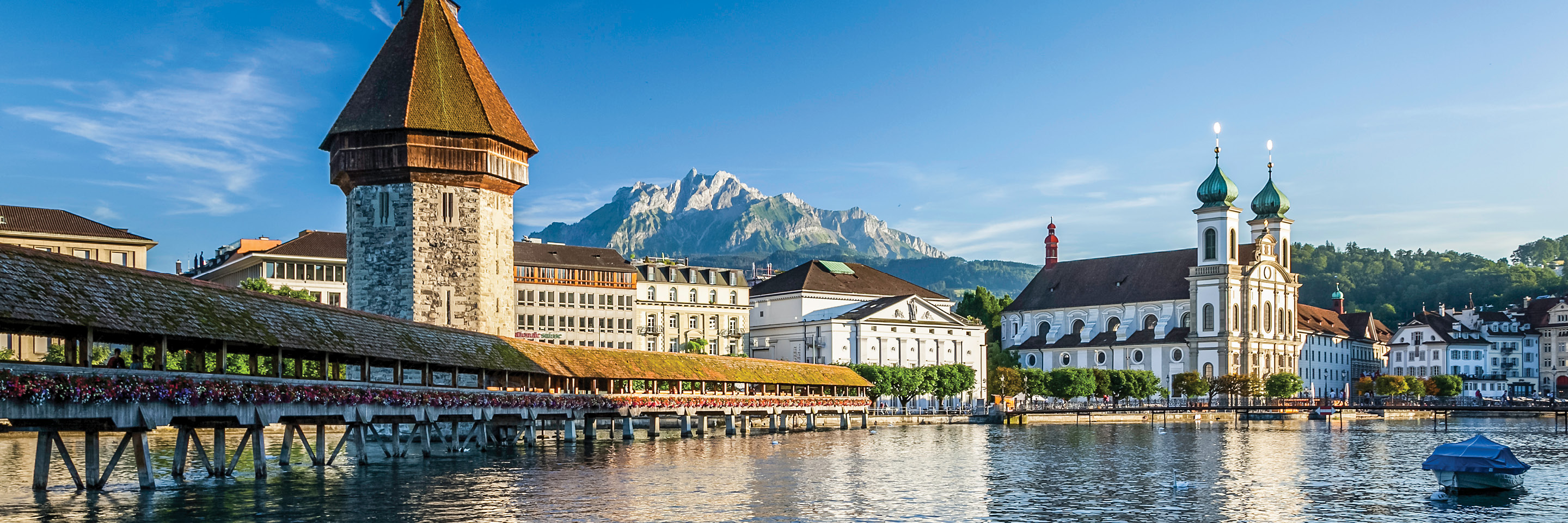
Switzerland is globally recognised for its high-quality education system, world-class research, and exceptional standard of living. Located in the heart of Europe, Switzerland is home to some of the most prestigious universities and hospitality institutions in the world, offering internationally respected degrees across fields such as business, engineering, hospitality, finance, science, and international relations.
Known for its political stability, safety, and innovation-driven economy, Switzerland provides students with a multicultural environment where German, French, Italian, and English are widely used in academic settings. With strong industry connections and an emphasis on practical learning, Switzerland is an ideal destination for students seeking both academic excellence and global career opportunities.
Informasi Edukasi
- Home to top-ranked universities and specialised institutions, especially in hospitality, business, engineering, and science
- Globally recognised degrees with strong employability outcomes
- Excellent reputation for research, innovation, and applied learning
- One of the safest countries in the world with outstanding quality of life
- Multilingual and multicultural study environment
- Strong links to global organisations, multinational companies, and international NGOs
- Central European location with easy access to neighbouring countries
Visa & Health Insurance
International students (non-EU/EFTA) are required to apply for a Swiss National (D) Student Visa before entering Switzerland. Processing times can take 8-12 weeks, so early application is strongly recommended. Applications are first submitted to the Swiss Embassy or Consulate in the applicant's country of residence and then forwarded to the relevant cantonal migration office in Switzerland for approval, which accounts for the extended processing timeline. It is advisable to apply at least 3-4 months before the program start date, with some cantons recommending applications up to 6 months in advance during peak periods.
Required Documents for Student Visa (Type D):
- Valid passport (minimum 6 months validity beyond intended stay with at least two blank pages)
- Completed and signed national visa application form
- Two recent passport-sized photographs (ICAO 9303 compliant)
- Official acceptance letter from a Swiss educational institution
- Proof of financial resources: minimum CHF 21,000 per year for living expenses plus tuition fees, demonstrated through bank statements (last 3-6 months), blocked account confirmation, or sponsorship letters
- Proof of accommodation (rental agreement, university housing confirmation, or host family letter)
- Health insurance coverage confirmation
- Curriculum vitae
- Motivation letter explaining study plans and post-graduation intentions
- Criminal background check (depending on country of origin)
Upon Arrival in Switzerland:
Within 14 days of arrival, all international students must register at the local Residents' Registration Office (Einwohnerdienste) of their commune. Required documents for registration include a valid passport, admission letter from the university, proof of health insurance, tenancy agreement, and proof of sufficient financial means (CHF 21,000 per year or CHF 1,750 per month). Registration fees are approximately CHF 40. Following registration, students must apply for a residence permit (B permit) at the cantonal migration office, which typically takes several weeks to be issued and is sent by postal mail. The residence permit is usually valid for one year and must be renewed annually for the duration of studies, with each renewal requiring updated proof of financial means.
Health insurance is mandatory for all students in Switzerland. The Swiss Federal Health Insurance Act (LAMal/KVG) requires every resident staying longer than three months to obtain health coverage from their first day in Switzerland. Students have two primary options:
Option 1: Swiss Mandatory Basic Health Insurance (LAMal/KVG)
- Comprehensive coverage with unlimited sums insured
- Free choice of any recognized doctor or hospital in Switzerland
- Estimated cost: CHF 250-400+ per month for standard coverage
- Deductible (franchise) options: CHF 300 to CHF 2,500 annually
- Co-payment: 10% of costs after reaching deductible, maximum CHF 700 per year for adults
- Required for: students over 35 years old, those working more than 20 hours per week, students with family members in Switzerland, and those staying longer than 6 years
Option 2: Private Student Insurance with Exemption
Students may choose Swiss-approved private insurance plans specifically designed for international students and request an exemption from mandatory LAMal insurance. Popular providers include:
- Swisscare: CHF 38-63 per month, available for students under 35, maximum 6 years coverage
- ScoreStudies (Antaé): CHF 64 per month, available for students under 29
- SWICA Student Care: CHF 91.70-115 per month, available for students under 25
- Coverio: CHF 38+ per month with various deductible options
Exemption Application Process:
Students with private international insurance or EU/EFTA students with a European Health Insurance Card (EHIC) can apply for exemption from Swiss mandatory insurance. The exemption must be requested within the first three months after arrival by submitting an application to the cantonal health authority (such as SVA in Zurich or similar offices in other cantons). The exemption review process can take several weeks to months. If exemption is not obtained within three months, students will be automatically assigned to a standard LAMal plan at significantly higher costs. The exemption is valid only for the duration of studies and maximum 6 years.
Special Provisions:
- EU/EFTA students with valid EHIC cards are not required to take out Swiss insurance if they are not gainfully employed and their existing coverage is deemed equivalent
- Non-EU/EFTA students typically must obtain either Swiss mandatory insurance or approved private student insurance
- Health insurance does not cover dental treatment costs
- Students must maintain continuous coverage; gaps can result in automatic enrollment in expensive mandatory plans
Estimated monthly cost for private student insurance: CHF 38-115, significantly lower than standard LAMal coverage. Students should verify whether their chosen insurance provider is recognized by their specific canton, as acceptance varies by cantonal authority.
Accommodation
Switzerland offers various accommodation options for international students. Due to high demand and limited availability, early planning—ideally 4-6 months before arrival—is essential. Accommodation costs vary significantly depending on the city, with Geneva, Zurich, and Basel being the most expensive, while smaller cities and rural areas offer more affordable options.
Student Residences / University Housing
Estimated cost: CHF 400-800 per month
- Limited availability, often prioritized for first-year students
- Typically includes utilities and internet in the monthly rate
- Application deadlines are strict: usually May 15 for autumn semester and October 15 for spring semester
- Campus-specific costs: Geneva student housing ranges CHF 714-2,652 per month depending on room type and floor level; St. Gallen offers rooms at CHF 550-700 monthly; Buchs provides options from CHF 400-700
- Many university residences offer shared apartments within student buildings, combining affordability with community living
- Wait times can be long; students should apply immediately upon receiving university acceptance
Shared Apartments (WG - Wohngemeinschaft)
Most popular option among students in Switzerland
Estimated cost: CHF 600-1,000 per month, depending on city and room size
- Offers opportunity to share rental costs while making friends
- Common areas (kitchen, bathroom, living room) are shared with flatmates
- Individual rooms typically range from 12-21 m²
- Major platforms for finding WG rooms: wgzimmer.ch (over 2,000 listings), weegee.ch (1,700+ shared flats), realadvisor.ch (2,199 listings)
- Application process often requires personal interviews or visits with current flatmates
- Some shared apartments have age restrictions (e.g., JUWO housing requires residents be under 29, students with low income)
- Switzerland's excellent public transportation system allows students to find affordable housing in smaller cities within 30 minutes of major universities
- Rooms are typically unfurnished, though some furnished options are available at higher rates
Private Apartment or Studio
Ideal for students seeking independence and privacy
Estimated cost: CHF 1,000-1,800+ per month, excluding utilities
- One-bedroom apartments: CHF 1,500-3,000 per month depending on location
- Significantly more expensive than shared options, representing 74% higher costs than Brussels, 60% more than Paris, and 56% costlier than London
- Utilities (electricity, water, heating, internet) add approximately CHF 200-224 per month
- Requires security deposit (typically 2-3 months' rent)
- Offers maximum privacy and flexibility for lifestyle preferences
- More common among graduate students, working professionals, and those with families
Homestay with Local Families
Offers cultural immersion and language practice opportunities
Estimated cost: CHF 700-1,200 per month, sometimes including meals
- Provides unique opportunity to learn about Swiss culture and daily life in an authentic family setting
- Many host families offer meal options, which can significantly reduce overall living costs
- Minimum stay requirements vary: some hosts require 7-31 nights minimum
- Room rates through homestay platforms start from CHF 15-85 per night (CHF 450-2,550 monthly)
- Host families often provide additional support with language learning, especially helpful for international students improving their German, French, or Italian
- Popular in areas like Geneva, Zurich, Bern, Basel, Lausanne, and Interlaken
- Students gain insight into Swiss family traditions, customs, and lifestyle
- Some homestay arrangements include access to family amenities such as gardens, laundry facilities, and common living areas
- Ideal for students seeking a supportive, family-oriented environment while adjusting to life in Switzerland
Accommodation Search Timeline:
- 6 months before arrival: Begin researching options and platforms
- 3-4 months before: Submit university housing applications and start contacting WG listings
- 2-3 months before: Secure accommodation confirmation for visa application
- Upon arrival: Have temporary accommodation arranged for first 1-2 weeks while finalizing permanent housing
Important Considerations:
- Switzerland's housing market is highly competitive, especially in university cities during peak enrollment periods (August-September)
- Many landlords require proof of income, student status confirmation, and references
- Rental contracts should be carefully reviewed; Swiss tenant protection laws are strong
- Students should budget for one-time costs: security deposit, furniture for unfurnished rooms, and initial setup expenses
Part-Time Work in Switzerland
International students are allowed to work part-time during their studies, subject to visa regulations and cantonal approval. Work regulations differ significantly based on nationality and permit type.
Work Restrictions for Non-EU/EFTA Students:
- Waiting Period: Must wait 6 months after starting their studies before beginning any work, including unpaid internships
- During Semester: Maximum 15 hours per week across all jobs combined
- During Official Semester Breaks: Full-time work (100%) is permitted
- University Confirmation Required: The university must provide written confirmation that the part-time work will not interfere with studies, delay graduation, or affect academic progress
- Employer Application: The employer must apply for a work permit on behalf of the student through the cantonal labor authority (Cantonal Office for Economy and Labor); students cannot apply themselves
- Work Permit Processing: Typically takes 2-4 weeks for approval
- Academic Priority: Work must not compromise academic performance; authorities monitor compliance
- Consequences of Violations: Breaking work regulations can result in residence permit revocation and deportation
Work Provisions for EU/EFTA Students:
- No Waiting Period: Can begin working immediately upon arrival
- Same Hour Restrictions: 15 hours per week during semester, full-time during breaks
- Simplified Procedures: Generally face fewer administrative barriers compared to non-EU/EFTA students
PhD Students Exception:
PhD students employed as university research or teaching assistants may work more than 15 hours per week, as this is considered part of their academic program. However, any additional employment outside their university position is still subject to the 15-hour weekly limit.
Salary and Wage Information:
The average part-time salary for students is CHF 20-30 per hour, among the highest student wages in Europe. Switzerland has no federal minimum wage, but several cantons have established minimum wage requirements as of 2025-2026:
Cantonal Minimum Wages (2025-2026):
- Geneva: CHF 24.48-24.59 per hour (highest in Switzerland, indexed annually)
- Jura: CHF 20.60-21.40 per hour
- Basel-Stadt: CHF 21.00-22.20 per hour
- Neuchâtel: CHF 21.31-21.35 per hour
- Ticino: CHF 19.00-20.50 per hour (varies by sector)
Hourly Wages by Job Type:
- On-campus jobs: CHF 18-28/hour
- Research/Teaching Assistant: CHF 25-35/hour
- Retail/Hospitality: CHF 20-25/hour
- Tutoring: CHF 30-50/hour
- Freelance Translation: CHF 55-65/hour
- IT/Tech Support: CHF 28-40/hour
- Freelance Graphic Design: CHF 50-80/hour
Monthly Earning Potential:
- During Semester (15 hours/week): CHF 1,300-1,700 per month (approximately ₹1.2-1.56 lakh or $1,460-1,910)
- During Semester Breaks (40 hours/week): CHF 4,000-5,000 per month (approximately ₹3.7-4.6 lakh or $4,500-5,600)
- At minimum 15 hours weekly with CHF 22/hour: CHF 1,320/month
- At 15 hours weekly with CHF 28/hour: CHF 1,680/month
Common Student Jobs:
- Hospitality and food service (restaurants, cafés, hotels)
- Retail positions in shops and stores
- University research assistants and teaching assistants
- Library and administrative support at universities
- Tutoring and language instruction
- Customer service roles
- IT support and technical positions
Post-Graduation Work Authorization:
After successfully completing their studies at a Swiss university, non-EU/EFTA students may apply for a short-term residence permit specifically for job searching. This permit is granted for 6 months if the graduate demonstrates sufficient financial means, has appropriate accommodation, and presents their final diploma or written confirmation of successful study completion.
Important Notes:
- The 15-hour weekly limit applies to the total of all jobs combined, not per individual job
- All employment must be reported to the cantonal migration office
- Students should prioritize academics; work is supplementary income, not the primary focus
- With Swiss wages being among the highest globally, even limited part-time hours can significantly offset living expenses
- Language skills (German, French, or Italian depending on region) are essential for most positions and greatly expand job opportunities
This part-time work opportunity, combined with Switzerland's high wages, allows international students to earn enough to cover a substantial portion of their monthly living expenses—making Swiss education more financially accessible despite the country's high cost of living.
1. Cantonal Universities & Federal Institutes of Technology
These research-intensive institutions represent the backbone of Swiss higher education. Switzerland operates twelve state-run cantonal universities distributed across the country, along with two Federal Institutes of Technology (the "ETH Domain"). These include research-focused universities such as ETH Zurich and EPFL, known for science, technology, and engineering excellence.
Federal Institutes of Technology:
ETH Zurich and EPFL are required by law to teach and conduct research in engineering sciences, natural sciences, architecture, mathematics, and related fields, offering Bachelor's, Master's, and Doctoral degree programs. Both institutions benefit from the ETH Domain framework, which includes four research institutes: Paul Scherrer Institute (PSI), Swiss Federal Laboratories for Materials Science and Technology (Empa), the Swiss Federal Institute of Forest, Snow and Landscape Research (WSL), and the Swiss Federal Institute of Aquatic Science and Technology (Eawag).
ETH Zurich Rankings & Global Recognition:
- QS World University Rankings : Ranked 7th globally
- Times Higher Education : Ranked 11th globally
- ARWU : Ranked 22nd globally
- Student Body: Approximately 23,500 students and doctoral candidates from over 120 countries
- Faculty: More than 500 professors engaged in teaching and research
- Research Impact: 21 Nobel laureates have studied, taught, or conducted research at ETH Zurich
- Innovation Ecosystem: Approximately 500 spin-off companies since 1996, up to 100 patent applications annually, and around 1,500 business collaborations worldwide
EPFL Rankings & Achievements:
- QS World University Rankings : Ranked 22-26 globally (variation by source)
- Times Higher Education : Ranked 32-35 globally
- ARWU : Ranked 44th globally
- Student Body: Around 12,000 students and doctoral candidates from 120+ countries
- Research Centers: More than 370 laboratories conducting research in renewable energy, medical technology, neurotechnologies, materials science, and information technology
- Innovation Achievements: 25 spin-offs founded in 2020, with the EPFL Innovation Park housing approximately 200 start-ups and research centers
- Strategic Focus for : Emphasis on artificial intelligence partnerships (Swiss AI initiative with ETH Zurich), learning sciences doctoral programs, and strengthened international collaboration beyond traditional ETH Zurich partnerships
Cantonal Universities:
The twelve cantonal universities include the University of Zurich (ranked 80-100 globally), University of Basel (ranked 120-158 globally), University of Geneva (ranked 155-166 globally), University of Bern (ranked 104-184 globally), University of Lausanne (ranked 125-224 globally), and others. These universities focus on research-driven education across diverse disciplines including humanities, natural sciences, medicine, law, and social sciences.
2. Universities of Applied Sciences (UAS)
Universities of Applied Sciences (Fachhochschulen/Hautes écoles spécialisées) focus on practical, career-oriented education with strong industry collaboration, representing a significant component of Switzerland's higher education landscape. These institutions distinguish themselves through their emphasis on applied research, professional practice, and real-world problem-solving.
Characteristics and Academic Offerings:
- Programs often include mandatory internships, applied projects, and case-study-based learning
- Academic focus on occupational fields and applied research rather than theoretical foundations alone
- Degrees available at Bachelor's, Master's, and increasingly Doctoral levels (in partnership with cantonal universities)
- Strong ties to industry and business, with employers often serving on curriculum advisory boards
Leading UAS Institutions:
ZHAW (Zurich University of Applied Sciences) ranks 801-1000 globally (Times Higher Education ) and is one of Switzerland's leading universities of applied sciences. ZHAW offers research and development focused on key societal challenges, including energy, digital transformation, and sustainable development, with multiple campuses in Winterthur, Zurich, and Wädenswil. ZHAW has established doctoral programs in partnership with ETH Zurich (Biomedical Science and Health Innovations) and the University of Zurich (Data Science).
Other Notable UAS Institutions:
- HES-SO (University of Applied Sciences and Arts Western Switzerland): Ranks 1201+ in THE and operates campuses across the French and Italian-speaking regions
- FHNW (University of Applied Sciences and Arts Northwestern Switzerland): Operates schools for applied psychology, architecture, design, informatics, life sciences, social work, technology, and music
- Multiple specialized schools offering programs in hospitality, business, engineering, health, and artistic disciplines
Doctoral Opportunities at UAS:
Doctoral students at UAS institutions are typically employed as scientific assistants, with dissertations embedded in research projects funded by Innosuisse, SNSF (Swiss National Science Foundation), or Horizon Europe programs. The degree is awarded by the partner university, but research is conducted and supervised at the UAS.
3. Private Institutions & Specialised Schools
Switzerland is internationally renowned for its private hospitality, culinary, and business schools, many offering English-taught programs with strong industry placements and global recognition.
Hospitality & Hotel Management Schools:
Switzerland hosts several world-class hospitality schools consistently ranked among the top globally:
Les Roches Global Hospitality Education
- QS World University Rankings : Ranked #2 globally for hospitality and leisure management
- Key Features: NECHE accreditation (regional institutional accreditation recognized worldwide), campuses in Crans-Montana (Switzerland) and Marbella (Spain), multi-campus study options
- Academic Programs: Bachelor's in Hotel Management, Master's in Hotel Management, online hotel management options
- Curriculum Focus: Digital transformation, operations management, finance, innovation, sustainability
- Recognition: Featured in CEOWORLD Magazine's list of top hotel schools
Glion Institute of Higher Education
- QS World University Rankings : Ranked #6 globally for hospitality and leisure management
- Campuses: Montreux (Switzerland) and London
- Specialization: Luxury hospitality, guest experience, and event leadership
- Alumni Success: Graduates hold senior roles with brands including Ritz-Carlton, Louis Vuitton, and Accor
- Accreditation: NECHE accreditation for international recognition
Swiss Hotel Management School (SHMS)
- QS World University Rankings : Ranked #3 globally for hospitality
- Employer Reputation Score: 97.2/100 (#2 globally)
- Academic Reputation Score: 93.7/100 (#3 globally)
- Teaching Philosophy: Hands-on, learning-by-doing approach combining traditional hospitality with digital transformation and modern practices
- Multiple Campuses: Located across Switzerland in iconic former palace hotels
César Ritz Colleges Switzerland
- QS World University Rankings : Ranked #5 globally for hospitality schools
- Accreditation: Federally accredited Swiss University of Applied Sciences with UN Tedqual Certification
- Innovation Philosophy: "Rethink. Refine. Realize." approach emphasizing entrepreneurship and C-Suite career preparation
- Alumni Outcomes: 40% of alumni hold C-Suite positions, 35% have founded businesses, 88% pursue advanced degrees after BSc
- Programs: Bachelor of Science in Hospitality Business Management, Master of Science in Leadership
- Network: Access to Swiss Education Group alumni network including SHMS, Culinary Arts Academy, and HIM Business School
Culinary Arts Academy Switzerland (CAAS)
- QS World University Rankings : Ranked #1 culinary school in Switzerland and only culinary school ranked in QS World University Rankings
- Employer Reputation: 90.5/100 (7th best hospitality school for employer reputation)
- Academic Reputation: 91.7/100 (5th best hospitality school for academic reputation)
- Campuses: Le Bouveret and Brig
- Faculty: Highly experienced chefs who have worked in Michelin-starred restaurants worldwide
- Programs: Bachelor of Arts in Culinary Arts, Master of Arts in Culinary Business Management, Swiss Diploma in Culinary Arts, Swiss Diploma in Pastry Arts
- Distinction: Only culinary arts school with Michelin star recognition
Other Prestigious Hospitality Schools:
- EHL (Ecole hôtelière de Lausanne): Ranked #1 globally for hospitality management; campuses in Lausanne, Singapore, and Chur-Passugg
- Hotel Institute Montreux (HIM): Swiss hospitality heritage with modern business thinking
- International Management Institute (IMI): Offers culinary business partnerships
Business & Management Schools:
IMD Business School (Lausanne)
- Location: Lausanne, overlooking Lake Geneva and the Alps, with strategic hubs in Singapore, Shenzhen, and Cape Town
- Rankings ():
- Bloomberg Businessweek: Ranked #2 in Europe
- Bloomberg Learning Experience: Ranked #1
- Bloomberg Entrepreneurship: Ranked #1
- Bloomberg Networking: Ranked #2
- Financial Times (): MBA ranked #8 in Europe, #22 worldwide; EMBA ranked #13 in Europe, #26 worldwide
- Poets & Quants 2024-: Ranked #9
- Five-Year Performance: Best average performance of any European school (2018-), with rankings of #1 three times, #2 once, and #3 once
- New Programs (2024): Executive Master in AI & Digital Business Transformation; Executive Master in Sustainable Business Transformation
- Executive Education Rankings: #1 globally for custom programs, #9 for open programs ( Financial Times)
- Class Composition: MBA Class of features 78 students from 38 countries
University of St. Gallen (HSG)
- Ranked 351-400 globally (THE ) with strong business and economics programs
Other Accredited Private Institutions:
Switzerland recognizes numerous private university institutes and specialized schools, including Franklin University Institute, IHEID (Institut de hautes études internationales et du développement), and various specialized business schools.
Academic Calendar & Intake Periods
Most Swiss universities follow a standardized academic calendar divided into two main semesters.
Standard Academic Calendar:
- Autumn/Fall Semester: Typically begins mid-August (administrative start) with lectures commencing mid-September (around week 38) and concluding in December (week 51)
- Spring Semester: Typically begins in February (around week 8) with lectures running from mid-February to May/June (week 22)
- Lecture Period: Approximately 14 weeks per semester
Example Timeline ( Academic Year):
- Fall semester: 1 August - 31 January ; lectures 15 September - 20 December
- Spring semester: 1 February - 31 July ; lectures 16 February - 30 May
- Academic year begins: typically 14-15 September
Application Intakes:
September Intake (Primary): The majority of Swiss higher education programs begin in September, with admission applications typically due between January and May of the same year. This represents the standard academic entry point for nearly all undergraduate and graduate programs.
February Intake (Limited Availability): Some institutions, particularly certain universities and specialized schools, offer additional February intake for select programs, though availability is considerably more limited than September intakes.
Note on February Intakes: Not all institutions or programs offer February intakes. Private hospitality schools and business schools are more likely to provide rolling admissions or additional entry points. For example, MEIG (Master Executive in International Business) is a 10-month program starting in September each year, with the academic year running September to July.
Application Timeline Recommendations:
- For September Intake: Apply 6-12 months in advance (ideally by May-June of the prior year)
- For February Intake (where available): Apply 3-6 months in advance (typically by August-September of the prior year)
- For Rolling Admissions: Private schools often accept applications throughout the year, subject to seat availability
European Access & Scholarship Opportunities:
International students, including those from non-EU/EFTA countries, have access to Swiss Government Excellence Scholarships for research or study at all Swiss cantonal universities, universities of applied sciences, both federal institutes of technology, and the four research institutes within the ETH Domain. Scholarship applications must be backed by a nominated academic supervisor at one of these institutions.
Summer Research Opportunities :
Multiple fully-funded summer research programs are available for international students:
- EPFL Summer Internship: 3-month program in Computer Science, Telecommunications, Electrical Engineering (deadline: 30 November )
- EPFL Life Sciences Summer Research Program: 8-week program in Life Sciences, bioengineering, genetics (deadline: varies)
- ETH Zurich Summer Fellowship: 2-month program in Computer Science (deadline: 16 December )
- CERN Summer Student Program: 8-13 week internationally competitive program (deadline: 26 January )
- UNIL Summer Research Program: 8-week program in biology, medicine, and related fields (July 3 - August 27, )
All programs include stipends, accommodation, travel support, and visa assistance for international participants.
Geo & Budaya
Universitas Terkemuka di Switzerland
Search:

We Didn't Find What You Mean
Try again or make sure you enter the correct keyword
Negara Lainnya



Connect with SUN Education