Kuliah di
Thailand
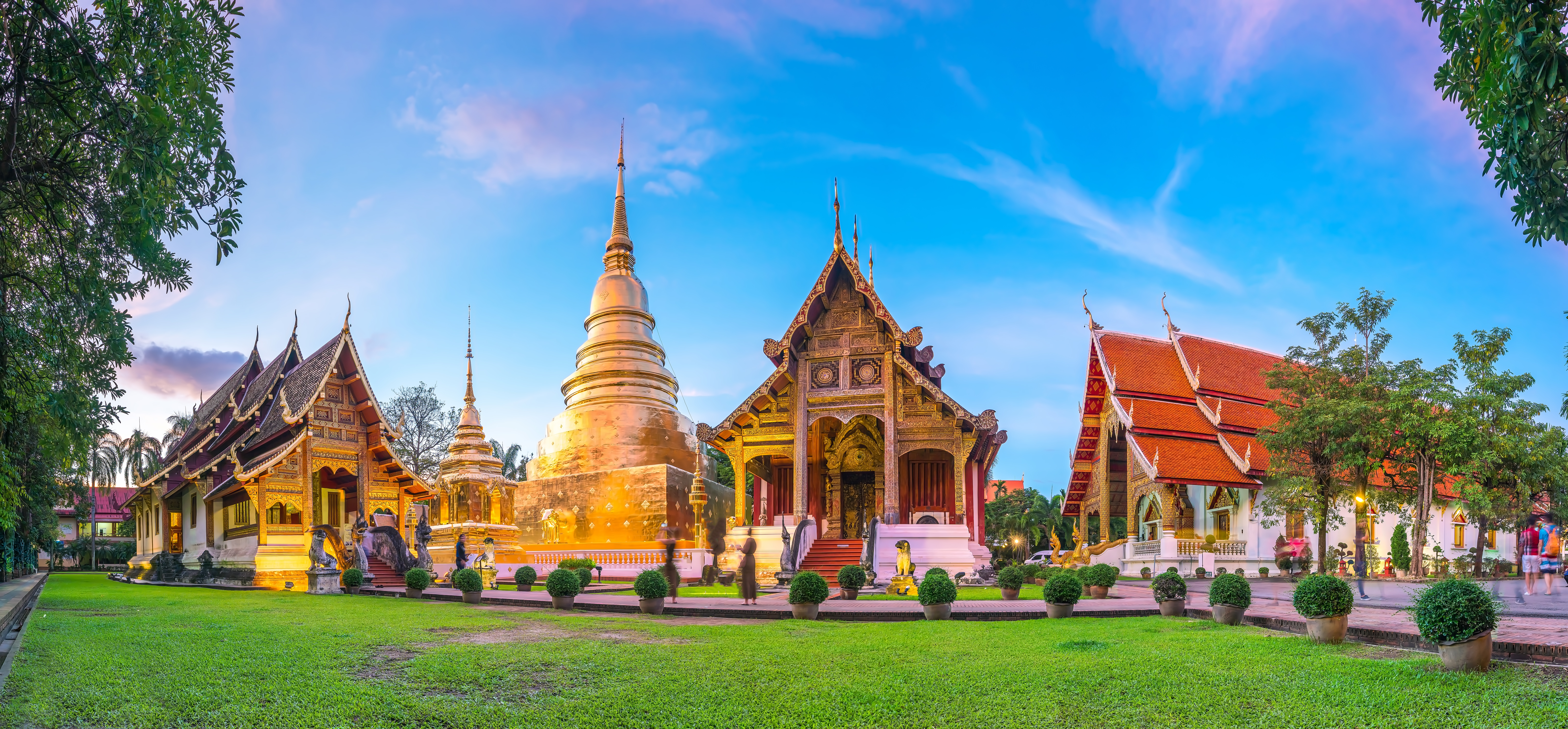
Thailand is an increasingly popular study destination in Southeast Asia, offering a unique blend of high-quality education, cultural richness, and affordable living costs. Known for its warm hospitality, vibrant cities, and rich traditions, Thailand provides international students with a welcoming and culturally immersive learning environment.
With a growing number of international universities and English-taught programs, Thailand attracts students from across Asia and beyond. Major cities such as Bangkok, Chiang Mai, and Phuket are home to reputable institutions offering globally recognised degrees, while Thailand’s strategic location in Asia makes it an ideal gateway for regional and international career opportunities.
Informasi Edukasi
- Affordable tuition fees and living costs compared to Western countries
- Wide range of English-taught undergraduate and postgraduate programs
- International universities and globally recognised qualifications
- Strong programs in business, hospitality, tourism, engineering, and health sciences
- Safe, friendly, and culturally diverse environment
- Excellent lifestyle with modern cities, nature, and rich cultural experiences
- Convenient travel access within Asia
Visa & Health Insurance
International students in Thailand are required to obtain a Non-Immigrant ED (Education) Visa to study legally in the country. This visa is usually arranged with the support of the university after receiving an offer letter. For Indonesian citizens specifically, the Royal Thai Embassy in Jakarta offers both single-entry 90-day ED visas and extended ED-Plus visas, which allow unlimited departures and re-entries without requiring re-entry permits.
The initial visa is often issued for 90 days and can be extended to cover the full duration of study through Thailand's immigration office, with extension applications typically submitted by the educational institution on behalf of the student.
A new ED-Plus visa variant introduced for bachelor's degree level students and above provides additional benefits: students may extend their stay for up to 1 year after graduation to seek employment or pursue other activities, and they are eligible to change their visa type in Thailand if they secure employment. Health insurance is mandatory for all international students in Thailand.
Students may use insurance provided by their institution or purchase a private international health insurance plan that meets Thai government requirements. International student health insurance plans start at approximately €27 (USD 30) per month for basic coverage, with comprehensive plans offering €250,000 coverage limits, repatriation assistance, and third-party liability protection.
The estimated cost of health insurance ranges from USD 300 to USD 800 per year, depending on coverage and provider; however, students are not eligible for Thailand's Universal Health Coverage (UHC) system due to their non-resident status.
Accommodation
Thailand offers a variety of accommodation options suitable for international students with different budgets and lifestyle preferences. Recent market data shows significant variation by city, reflecting growing international student demand and post-pandemic rental recovery.
On-Campus or University-Affiliated Housing
Many universities provide student dormitories or partnered residences located close to campus. These are typically furnished and offer basic facilities such as security, internet, and utilities. In Bangkok, near prestigious universities like Chulalongkorn and Thammasat, estimated costs range from THB 12,000-25,000 per month (approximately USD 340-710).
While in Chiang Mai costs are lower at THB 6,000-15,000 (USD 170-430), and in Phuket from THB 8,000-18,000 (USD 230-510). University-affiliated housing typically maintains occupancy rates exceeding 85-95%, ensuring consistent availability.
Off-Campus Apartments and Shared Housing
Students may also choose to rent private apartments or share condos with friends. This option offers more independence and flexibility. In central Bangkok areas such as Sukhumvit or Silom, one-bedroom apartments range from THB 15,000-30,000 per month (USD 430-860), while in suburban areas like Bangna or Ratchada, prices drop to THB 8,000-15,000 (USD 230-430).
Shared housing for students in major university cities typically costs THB 5,000-15,000 per month, with many apartments fully furnished and utilities included. Monthly costs generally range from USD 200-USD 600, depending on location, size, and facilities.
Private Condominiums
For students seeking premium facilities, private condos with gyms, pools, and security are widely available, especially in Bangkok. Prices usually start from USD 500 per month and above, excluding utilities. Recent market trends show Bangkok rents have increased approximately 7% over the past two years, with further growth expected in 2026.
Part-Time Work
International students in Thailand face strict employment restrictions under their ED Visa. According to Thai Immigration Law, students holding an ED Visa are not permitted to undertake paid work, freelance consulting, or employment outside the scope of their academic curriculum.
However, important exceptions exist for curricular internships. Students who undertake internships as a mandatory part of their academic curriculum may do so without requiring a separate work permit, provided the internship is unpaid and the student remains on their ED visa. The ED visa for such curricular internships is initially valid for 90 days and is extendable with a confirmation letter from the educational institution.
For non-curricular internships where students create active output for an organization, a Non-Immigrant B visa and a work permit are required. Once granted, trainees with a Non-Immigrant B visa and work permit position as "Trainee" are not required to receive a minimum salary, nor is the work permit issuance dependent on a Thai employment ratio.
Paid internship opportunities do exist; for example, major multinational companies like Accenture offer paid summer internship programs (June-August) for year 1-4 university and master's students, typically 8-12 weeks in duration with on-site and hybrid options. Specialized programs such as TEFL (Teaching English as a Foreign Language) internships offer guaranteed minimum salaries of THB 35,000 per month (approximately USD 1,000) with placement support and visa guidance.
For those seeking formal employment after graduation, Indonesian citizens and other foreign nationals typically require a Non-Immigrant B visa and work permit; work permits take approximately 5-10 working days to process once all documentation is submitted to the Ministry of Labour.
Thailand's higher education system consists of public universities, private universities, and international colleges, with several institutions offering full English-medium programs designed specifically for international students. The system is comprehensive, with top public universities including Chulalongkorn University, Mahidol University, Kasetsart University, and Prince of Songkla University; prestigious private institutions such as Bangkok University, Thammasat University, and UTCC International; and dedicated international colleges affiliated with major public universities (KKUIC, PSUIC, NUIC, BUUIC) that form the Thailand International College Consortium (TICC).
Degrees typically follow the international structure of Bachelor's (3-4 years), Master's (1-2 years), and Doctoral programs. The academic year usually begins in August or September, with some universities also offering January intakes and summer sessions. For example, Bangkok University's 2026 academic calendar shows Semester 1 starting August 17 and Semester 2 starting January 11, with a Summer Session from June to July. International programs explicitly teach all courses entirely in English; universities such as Chulalongkorn University, Mahidol University, and King Mongkut's University of Technology Thonburi feature extensive English-medium bachelor's and master's options in engineering, business, medicine, and sciences.
As of 2025-2026, Thailand's international education landscape is expanding significantly, with dual-degree and "2+2" or "3+2" transfer programs becoming increasingly common, allowing Indonesian and other international students to study two years in Thailand and two years in partner countries (such as Taiwan) while earning two degrees. New scholarship opportunities include the Thailand International Postgraduate Program (TIPP) 2026, a fully funded master's degree program managed by Thailand International Cooperation Agency (TICA) for eligible international students, with a deadline of February 23, 2026.
Indonesian-Thai academic partnerships are actively strengthening; recent agreements include collaborations between Universitas Pembangunan Nasional (UPN) Jawa Timur and Prince of Songkla University on agriculture and sustainable development, as well as between Universitas Muhammadiyah Kalimantan Timur and Thai institutions for research and student mobility. These partnerships facilitate student exchange programs, joint research, and dual-degree pathways that make Thailand increasingly accessible for Indonesian degree-seekers.
Geo & Budaya
Universitas Terkemuka di Thailand
Search:

We Didn't Find What You Mean
Try again or make sure you enter the correct keyword
Negara Lainnya



Connect with SUN Education